



 English
 中文简体
中文简体 Deutsch
 Español
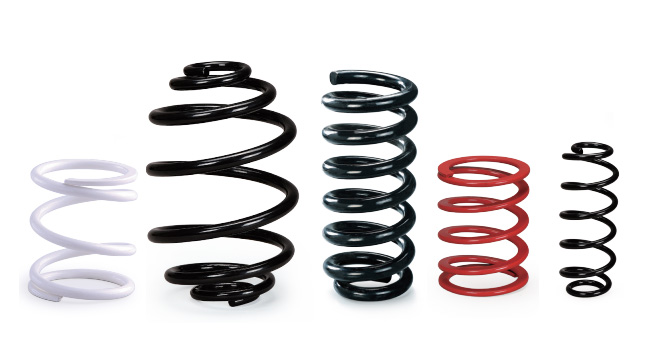
Modified Cars Off-Road Vehicles Suspension Springs Manufacturers
1. Advantages of off-road vehicle modified suspension springs
High-strength load-bearing capacity: Our off-road vehicle suspension springs are designed to withstand high loads, impacts, and stresses in terrains, ensuring performance on mountain roads, deserts, and muddy and uneven roads.
Enhanced durability and fatigue resistance: Made of high-quality high-strength steel, after special heat treatment, it has strong corrosion resistance and fatigue resistance, ensuring long-term performance in harsh environments.
Excellent shock absorption and comfort: The special spring design and material enable the spring to effectively absorb road bumps, reduce the impact on the vehicle body, improve driving comfort, and provide a smooth driving experience even in off-road conditions.
Customized design: According to the customer's off-road needs and vehicle models, we provide professional customization services, and accurately adjust the hardness and length of the suspension springs to optimize the overall performance of the suspension system.
Improve handling and stability: The optimized spring design can provide better vehicle handling, ensure that the vehicle has a stronger grip and stability in complex terrain, and improve driving safety.
2. Advantages of road car modified suspension springs
Superior handling and stability: Our road car suspension springs are precisely designed to effectively control the height and posture of the vehicle body, improve stability when driving at high speeds, and ensure that the driver has a handling experience under various road conditions.
Balanced comfort and performance: The hardness and elasticity of the springs are carefully adjusted to absorb small-scale road vibrations to ensure comfort, and provide sufficient support to ensure the stability of the vehicle when driving on curves and at high speeds.
Optimized aerodynamic performance: In order to reduce wind resistance and improve the overall performance of the vehicle, our road car suspension springs are specially designed to effectively reduce the changes in the body posture and improve aerodynamic stability during driving.
Durability and high performance: Using high-quality spring materials and advanced heat treatment processes provides higher durability and fatigue resistance, reduces maintenance frequency, and provides long-term and stable performance support for car owners.
Precise tuning and personalized customization: According to customers' requirements for driving experience, we provide personalized tuning services, and can accurately adjust the suspension springs according to the model, driving style, and road conditions to ensure the driving performance.
3. Comprehensive advantages of manufacturers
Advanced production technology: The company adopts advanced production equipment and technology to ensure that each suspension spring meets precision and quality standards.
Strong R&D capabilities: With many years of industry experience and a professional R&D team, we are able to continuously innovate and optimize product design based on market demand and customer feedback.
Comprehensive quality control: From raw material selection to the production process, every link is strictly controlled to ensure that each product is rigorously tested and meets high-quality standards.
Strong after-sales service support: Provide a complete after-sales service system, including technical consultation, product installation guidance, and long-term product warranty, so that customers have no worries.
Product List
-

-
Modified car suspension spring
-
Modified car suspension spring
-
Modified car suspension spring
-
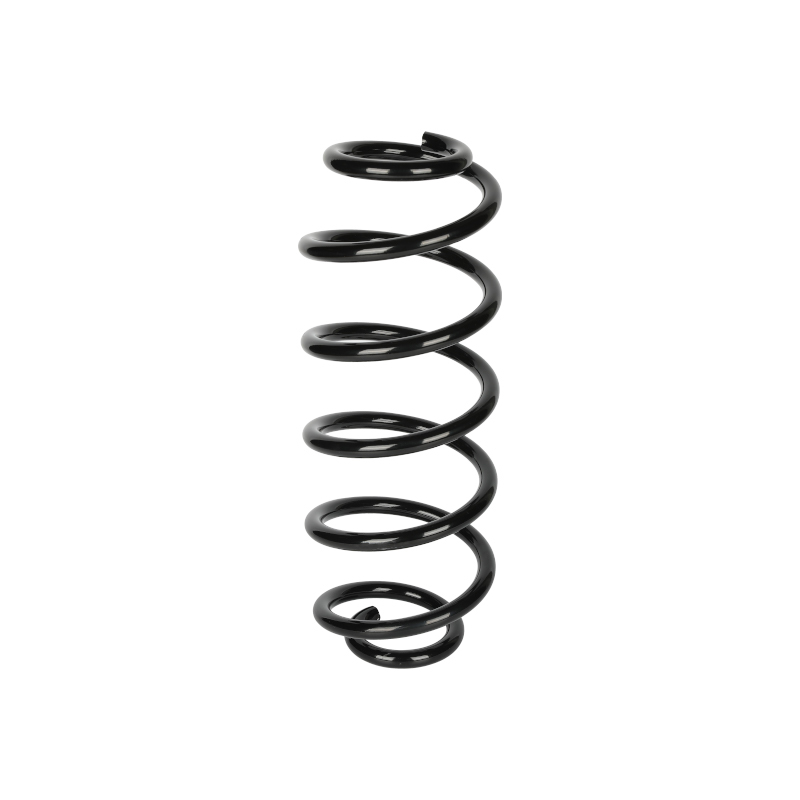
Modified car suspension spring
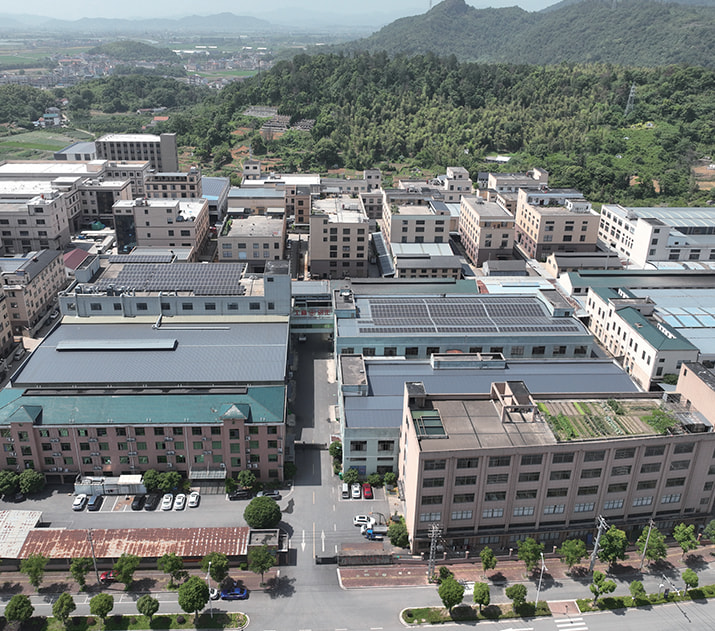
About Us
Zhejiang Zongheng Spring Co., Ltd. is China Modified Cars Off-Road Vehicles Suspension Springs Manufacturers and Modified Cars Off-Road Vehicles Suspension Springs Manufacturers, was established in 2021 and is a production-oriented enterprise specializing in the design and manufacture of brake system springs, suspension system springs, and general spiral springs. The company is located in Fengqiao, Zhuji, Zhejiang, covering an area of 30,000 square meters. The company uses high-quality raw materials from domestic and foreign sources and has advanced heat treatment, coiling, shot blasting, shaping, and surface treatment equipment. The production process is implemented according to the IATF/TS16949 international quality management system, and the company is committed to implementing 6S management and digital production processes to provide quality and reasonably priced products and services to domestic and foreign markets. The company is constantly researching and surpassing in the direction of high strength, lightweight, and high fatigue life. The company has a complete laboratory and has introduced advanced testing equipment such as spectrometers, online flaw detectors, image analyzers, tensile testing machines, fatigue testing machines, multi-functional sand and stone impact testers, lateral force load testers, etc., allowing customers to understand the product characteristics of each batch. We adhere to the quality policy of "precision in work and integrity in the product", inherit the "craftsman spirit" and strive to make every spring well. We look forward to exchanging and cooperating with customers at home and abroad for mutual development.
Certificate
-
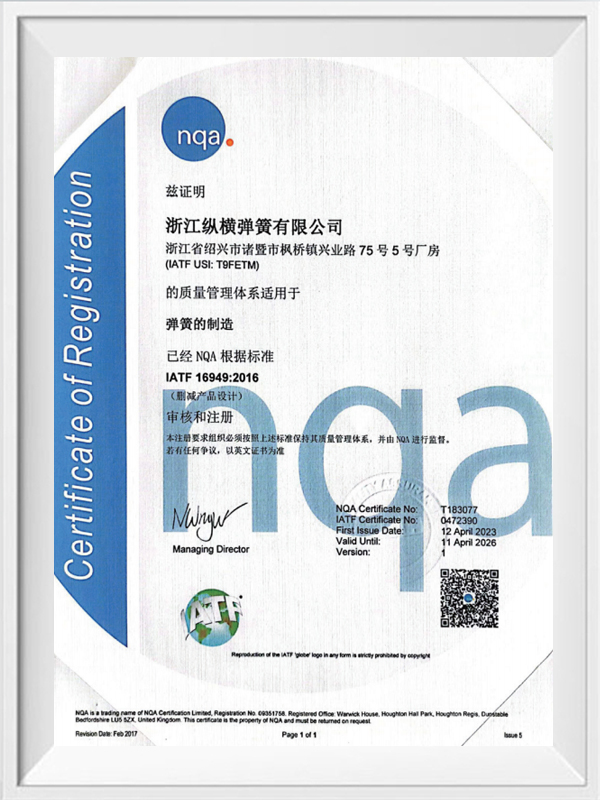 IATF 16949:2016
Latest News
-
Knowledge 2026-09-22
The spring constant of a car suspension is the force needed to compress the suspensi...
Read More -
Knowledge 2026-09-14
When the front of your car sits noticeably lower on one side, or the steering wheel ...
Read More -
Knowledge 2026-09-11
The spring constant of a car suspension spring—also known as the spring rate or stif...
Read More -
Knowledge 2026-09-04
Here is the practical answer you need before you order parts: springs carry the vehi...
Read More -
Knowledge 2026-08-24
A coil spring suspension system is a vehicle suspension design that uses helically w...
Read More
-
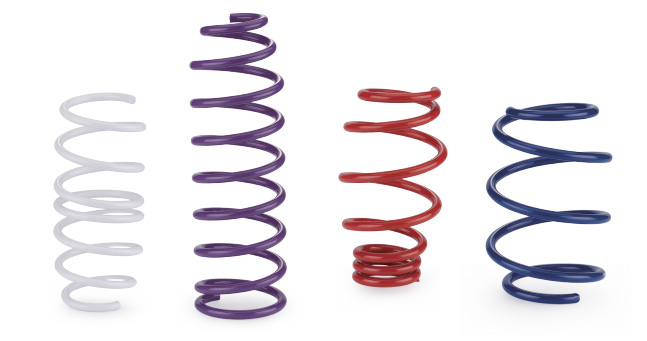
 Automobile Suspension Spring
1. Our automotive suspension springs are made with advanced manufacturing technology and are precisely designed to ensure smooth d...
-
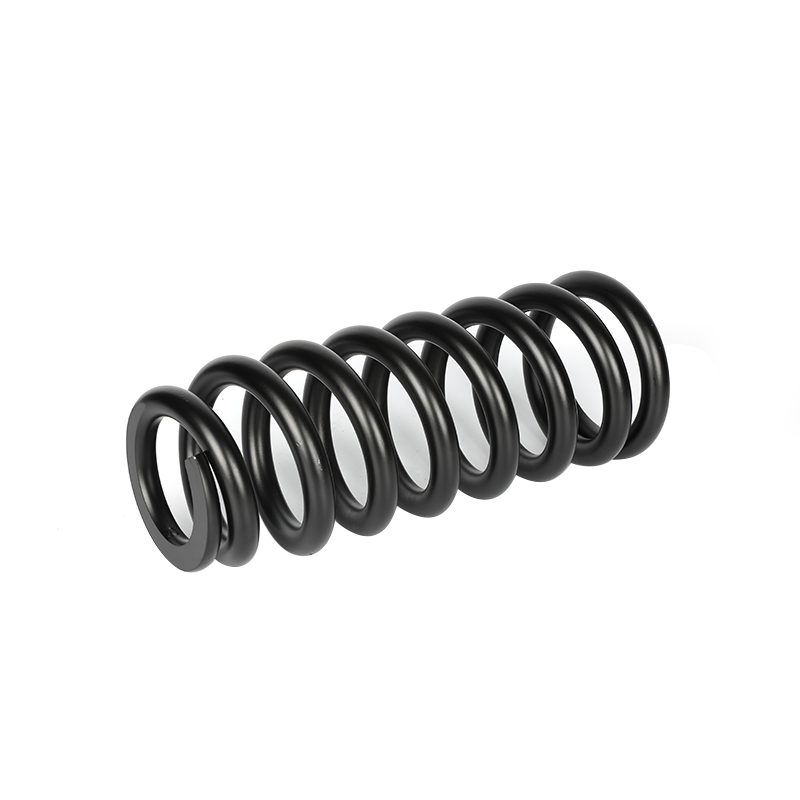
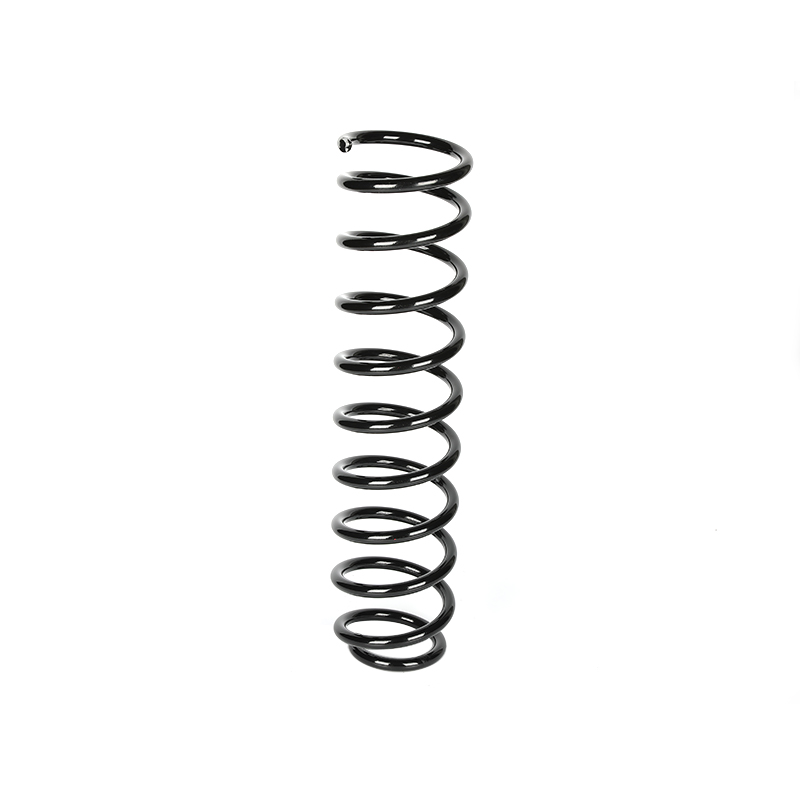
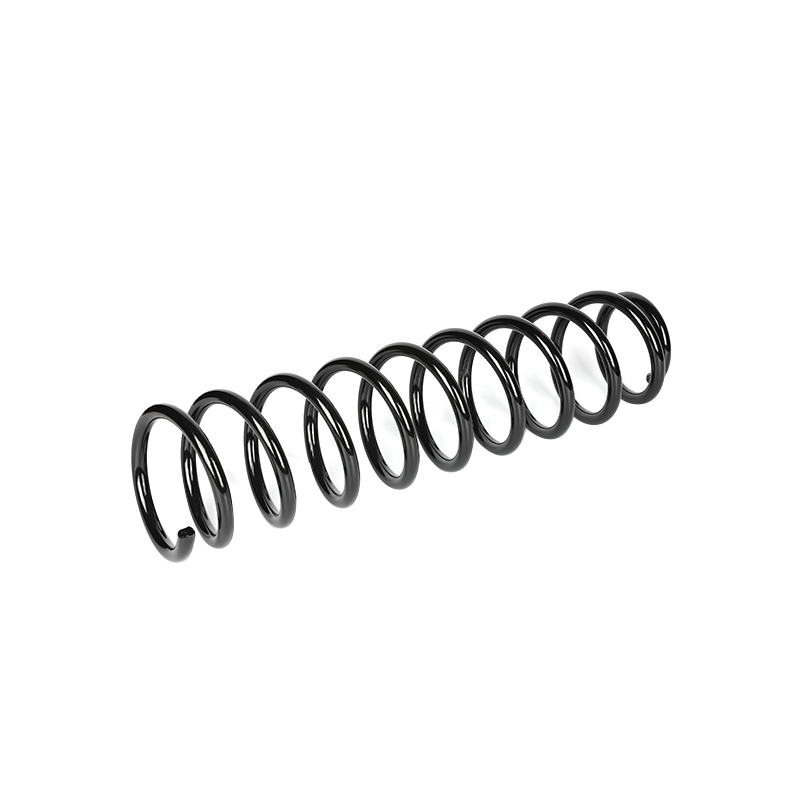
Modified Car Suspension Spring
1. Advantages of off-road vehicle modified suspension springsHigh-strength load-bearing capacity: Our off-road vehicle suspension ...
-
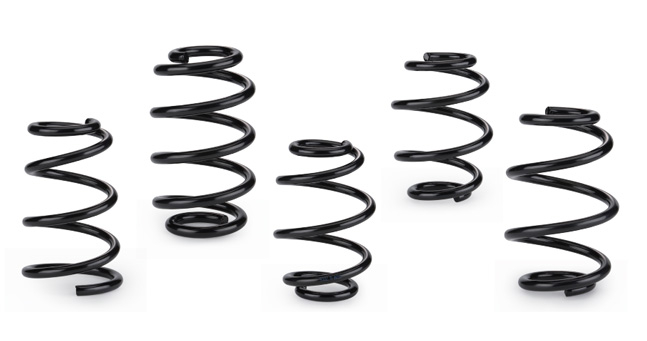 Brake Spring
1. Brake springs play an important role in ensuring the stability of the brake chamber and brake system.Precision manufacturing an...
Contact Us Now
Modified Cars Off-Road Vehicles Suspension Springs Industry knowledge
1. Overview
Suspension springs for modified cars and off-road vehicles differ from standard OE replacement springs in that they are specified to alter one or more suspension characteristics beyond the original factory design. Modifications may target increased ride height for greater ground clearance, increased spring rate for load-carrying capacity, reduced ride height for handling, or enhanced articulation for terrain traversal. In each case, the spring is a purpose-designed component matched to the specific modification objective and vehicle platform, not a direct OE substitute.
Zhejiang Zongheng Spring Co., Ltd., located in Fengqiao, Zhuji, Zhejiang Province, manufactures suspension system springs with capabilities directed at high strength, lightweight construction, and high fatigue life. These characteristics are directly relevant to the elevated stress conditions that modified and off-road suspension springs encounter relative to standard passenger car applications. Production is conducted under the IATF/TS16949 quality management system.
2. Application Categories
2.1 Lift Kit Springs for Off-Road Vehicles
Lift springs increase the vehicle's ride height above the factory setting, providing additional ground clearance for obstacle negotiation and accommodating larger-diameter tyres. A lift spring is longer in free length and may carry a higher spring rate than the OE spring to support the increased unsprung and sprung weight associated with larger tyres and aftermarket axle or skid plate additions. Lift heights are typically specified in defined increments such as 50 mm, 75 mm, or 100 mm above OE height, with each increment requiring a specific spring geometry.
2.2 Progressive Rate Springs for Mixed On- and Off-Road Use
Progressive rate springs use variable pitch or variable wire diameter to produce a spring rate that increases as the spring compresses. At low loads the spring operates at a lower rate, providing ride compliance on-road, while at higher loads the rate increases, providing support on rough terrain and under load. This characteristic is achieved through coil geometry rather than material change and is widely used in SUV and pickup truck suspension modifications where the vehicle is used across both highway and off-road environments.
2.3 Heavy-Load Assist Springs
Load assist springs are supplementary or replacement springs with a higher rate than the OE spring, specified for vehicles that regularly carry payloads above the factory design load. Common applications include pickup trucks fitted with camper bodies, tow vehicles with rear weight bias, and commercial-use SUVs. The spring rate increase must be calculated against the actual payload to maintain the vehicle's ride height and geometry within acceptable limits under load.
2.4 Lowering Springs for Modified Passenger Cars
Lowering springs reduce the vehicle's ride height below the OE setting, altering the suspension geometry to reduce body roll tendency and modify the vehicle's visual stance. They typically feature a higher spring rate than the OE spring to compensate for the reduced suspension travel at the lowered height. The spring must be engineered to avoid coil bind throughout the remaining suspension travel range and to maintain adequate jounce clearance.
3. Key Parameter Differences vs. OE Springs
| Parameter | OE Spring | Lift Spring | Lowering Spring | Progressive Rate Spring |
| Free length | Factory spec | Longer | Shorter | Variable by application |
| Spring rate | Fixed OE value | Equal or higher | Higher than OE | Increases with deflection |
| Ride height effect | Factory height | Increased | Reduced | Maintained or raised |
| Coil geometry | OE profile | Extended cylindrical | Compact cylindrical | Variable pitch or diameter |
| Fatigue stress level | Designed to OE cycle target | Elevated — terrain inputs | Elevated — reduced travel margin | Elevated — mixed load cycles |
4. Material and Strength Requirements
Modified and off-road suspension springs operate under stress conditions that can exceed those of the OE application in several ways. Terrain-induced impacts produce high-amplitude load spikes. Lifted vehicles fitted with larger tyres carry elevated unsprung mass. Lowered springs operate closer to their solid height, reducing the available fatigue stress margin. These factors make high-strength alloy steel the standard material choice for this product category.
Common material grades for this application include 55CrSi, 54SiCr6, and 51CrV4, with tensile strengths in the range of 1800 MPa to 2050 MPa after heat treatment. The higher strength allows a given load and deflection target to be met with a smaller wire cross-section, supporting the lightweight objective while maintaining or extending fatigue life relative to a standard carbon steel spring of equivalent load capacity.
Shot peening is a standard process step for this spring category. The compressive residual stresses introduced at the wire surface significantly extend fatigue life under the high-amplitude, variable-frequency loading cycles characteristic of off-road use.
5. Surface Protection Considerations
Off-road operating environments expose suspension springs to conditions that are more aggressive than typical on-road use. Surface treatment selection must account for:
- Stone and debris impact: coating systems must resist chipping from road debris and terrain impact. The sand and stone impact test is used to evaluate coating performance under these conditions.
- Mud and water immersion: prolonged contact with wet soil accelerates corrosion at coating damage sites. Epoxy and powder coating systems provide higher resistance than standard paint in these environments.
- Salt exposure: vehicles used in coastal regions or on salt-treated winter roads require additional corrosion protection, as corrosion pits are a primary fatigue crack initiation site in suspension springs.
6. Specification Process for Custom Spring Orders
Custom suspension spring orders for modified or off-road applications require the following information to enable accurate spring design and quotation:
- Vehicle platform: make, model, year, and suspension variant to establish the installation envelope constraints.
- Target ride height change: lift or drop dimension from OE height, at the specified measurement point.
- Additional load: any payload or accessory weight above the OE vehicle kerb weight that the spring must support.
- Rate characteristic: linear or progressive, with the preferred rate value or range at defined deflection points.
- End configuration: seat type on the vehicle determines whether closed-ground, pigtail, or other end forms are required.
- Fatigue life target: number of cycles at the design stress amplitude, referenced to the intended use cycle (road, trail, competition).
- Surface treatment: operating environment determines the required coating specification.
7. Frequently Asked Questions
Q: Can a higher spring rate improve off-road performance in all conditions?
A higher spring rate increases load-carrying capacity and reduces body roll, but it also transmits larger terrain-induced force spikes to the vehicle structure and reduces the suspension's ability to maintain tyre contact over uneven surfaces. The optimal rate is a balance between load support, travel compliance, and the vehicle's shock absorber specification. Spring rate selection should be considered alongside shock absorber valving for a matched system.
Q: Does lifting a vehicle with longer springs affect suspension geometry?
Yes. Increasing ride height changes the operating angles of control arms, track bars, and CV joints, moving suspension geometry away from the designed position. At lift heights beyond approximately 50 mm, correction components such as adjustable control arms, differential drop brackets, or extended bump stops are typically required to bring geometry back within acceptable limits. Spring selection alone does not address these secondary geometry effects.
Q: What fatigue life should be specified for off-road suspension springs?
Fatigue life targets for off-road springs are defined by the intended use cycle and severity. A spring used primarily on highway with occasional light trail use operates under substantially lower stress amplitude than one used in regular rock crawling or competition conditions. The design stress amplitude and target cycle count should be defined based on the actual use profile, and fatigue testing at Zongheng Spring's laboratory can be conducted against the agreed specification to validate the design before production release.
Q: Is a wheel alignment necessary after installing modified suspension springs?
A full four-wheel alignment is required after any suspension spring change that alters ride height, whether a lift or a drop. The changed ride height moves suspension linkage attachment points relative to their designed positions, altering camber, caster, and toe angles. Operating the vehicle without alignment correction after a ride height change will result in accelerated and uneven tyre wear and altered steering behavior.
Q: What testing is applied to verify off-road spring quality at Zongheng Spring?
Each production batch is subject to material verification by spectrometer, dimensional and load inspection, fatigue testing at defined stress amplitude and cycle count, online flaw detection for surface defects, and sand and stone impact testing to evaluate coating durability under debris impact conditions representative of off-road use. Batch-level test records are available to customers for each shipment.
Zhejiang Zongheng Spring Co., Ltd. | Fengqiao, Zhuji, Zhejiang Province, China | Established 2021
This document is prepared for general industry reference. Specifications and process details are indicative and subject to confirmation for each product application and vehicle platform.
INQUIRE NOW
CONTACT US

- ADD: No. 75 Xingye Road, Fengqiao Town, Zhuji City, Zhejiang Province, China
- Tel: +86-575-87599266
- Mob: +86-13675761610
- Email: [email protected]
