



 English
 中文简体
中文简体 Deutsch
 Español
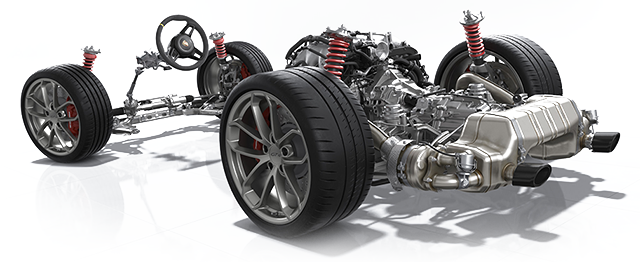
1. Our automotive suspension springs are made with advanced manufacturing technology and are precisely designed to ensure smooth driving and handling of the vehicle under various road conditions. They provide support in shock absorption, load bearing, and stability, and enhance the comfort and safet...
High-Strength Coil Springs Suppliers
Product Categories
-
-
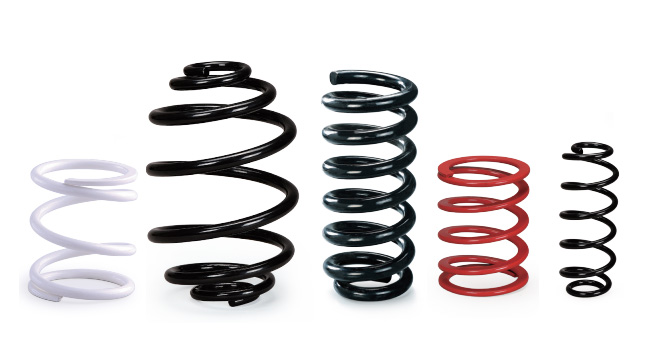 1. Advantages of off-road vehicle modified suspension springsHigh-strength load-bearing capacity: Our off-road vehicle suspension springs are designed to withstand high loads, impacts, and stresses in terrains, ensuring performance on mountain roads, deserts, and muddy and uneven roads.Enhanced dura...
 -
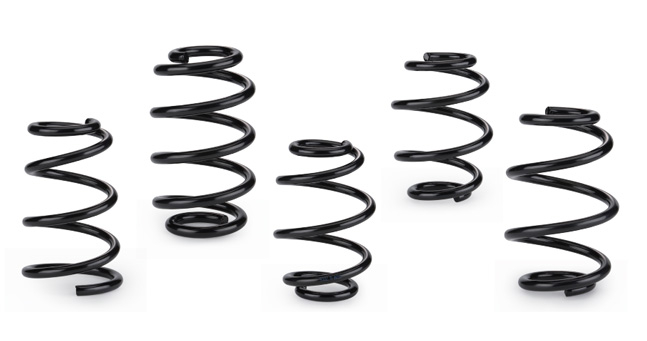 1. Brake springs play an important role in ensuring the stability of the brake chamber and brake system.Precision manufacturing and high performance: Our brake springs are made of high-quality alloy steel, and through special heat treatment and fine processing, ensure that the springs have high comp...

About Us
Zhejiang Zongheng Spring Co., Ltd. is China High-Strength Coil Springs Suppliers and High-Strength Coil Springs Company, was established in 2021 and is a production-oriented enterprise specializing in the design and manufacture of brake system springs, suspension system springs, and general spiral springs. The company is located in Fengqiao, Zhuji, Zhejiang, covering an area of 30,000 square meters. The company uses high-quality raw materials from domestic and foreign sources and has advanced heat treatment, coiling, shot blasting, shaping, and surface treatment equipment. The production process is implemented according to the IATF/TS16949 international quality management system, and the company is committed to implementing 6S management and digital production processes to provide quality and reasonably priced products and services to domestic and foreign markets. The company is constantly researching and surpassing in the direction of high strength, lightweight, and high fatigue life. The company has a complete laboratory and has introduced advanced testing equipment such as spectrometers, online flaw detectors, image analyzers, tensile testing machines, fatigue testing machines, multi-functional sand and stone impact testers, lateral force load testers, etc., allowing customers to understand the product characteristics of each batch. We adhere to the quality policy of "precision in work and integrity in the product", inherit the "craftsman spirit" and strive to make every spring well. We look forward to exchanging and cooperating with customers at home and abroad for mutual development.
Certificate
-
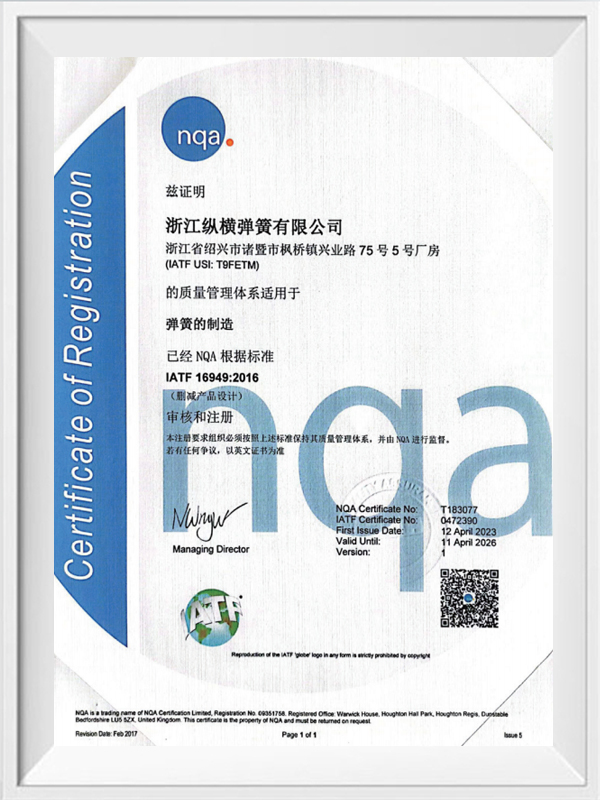 IATF 16949:2016
Latest News
-
Knowledge 2026-09-22
The spring constant of a car suspension is the force needed to compress the suspension spring by one unit of length. If a 500 N load compresses a coil spring by 10 mm, the spring constant is 50 N/mm. Engineers use this...
Read More -
Knowledge 2026-09-14
When the front of your car sits noticeably lower on one side, or the steering wheel pulls slightly under braking, the coil front suspension springs are the first parts to check. A coil front suspension is the standard ...
Read More -
Knowledge 2026-09-11
The spring constant of a car suspension spring—also known as the spring rate or stiffness—is the ratio between the force applied to the spring and the distance it compresses. Measured in newtons per millimetre (N/mm) o...
Read More
Contact Us Now
High-Strength Coil Springs Industry knowledge
1. Overview
High-strength coil springs are helically wound elastic components manufactured from steel wire or bar stock with tensile strength substantially above conventional spring steel grades. The term "high-strength" in this context refers to materials and manufacturing processes that allow the spring to sustain elevated stress levels under cyclic loading without premature fatigue failure, permanent set, or fracture. This combination of properties is required in demanding applications such as automotive suspension systems, brake assemblies, and heavy industrial machinery.
Zhejiang Zongheng Spring Co., Ltd., located in Fengqiao, Zhuji, Zhejiang Province, focuses specifically on the design and manufacture of springs in the direction of high strength, lightweight, and high fatigue life. The company's production scope covers brake system springs, suspension system springs, and general spiral springs, all subject to the IATF/TS16949 international quality management system.
2. Material Basis for High Strength
The mechanical performance of a coil spring is fundamentally determined by the wire or bar material. Common material categories used in high-strength coil spring production include:
| Material Type | Typical Tensile Strength | Common Application |
| 55CrSi / 54SiCr6 | 1900 - 2050 MPa | Automotive suspension |
| 51CrV4 | 1800 - 2000 MPa | Suspension and valve springs |
| SAE 9254 / SUP12 | 1750 - 1950 MPa | Passenger car coil springs |
| High-carbon steel (SL / SM / SH grade) | 1400 - 1800 MPa | General industrial springs |
Material selection is made in conjunction with the target load specification, fatigue life requirement, operating temperature range, and corrosion environment. Raw material sourcing from qualified domestic and international suppliers is part of the incoming quality process at Zongheng Spring.
3. Types of High-Strength Coil Springs
3.1 Compression Coil Springs
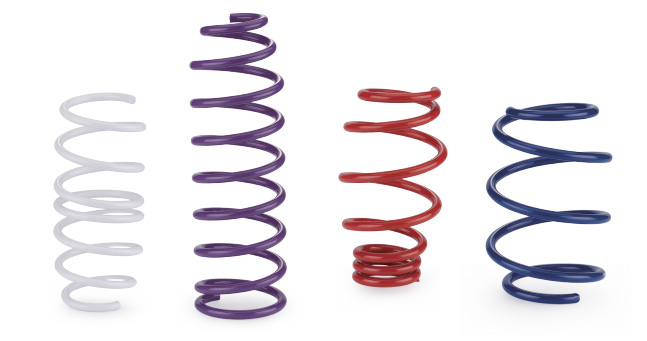
Compression springs resist axial compressive forces and return to their free length when the load is removed. In automotive suspension systems, these springs carry the vehicle weight and absorb road inputs. They may feature variable pitch or variable diameter geometry (barrel, conical, or hourglass profiles) to achieve progressive spring rate characteristics required by suspension tuning.
3.2 Brake System Return and Retraction Springs
Brake system springs include return springs, retraction springs, and hold-down springs used in drum brake and disc brake assemblies. These components operate under high-cycle fatigue conditions and must maintain their load characteristics throughout the vehicle service life without set or loss of function. Material strength and heat treatment precision are critical parameters for this category.
3.3 General Spiral Springs
General spiral springs cover a broad range of industrial compression and tension coil springs used in machinery, valves, agricultural equipment, and consumer goods. High-strength variants in this category are specified where space constraints require high load in a compact spring envelope, or where fatigue life targets exceed those achievable with standard carbon steel wire.
4. Key Manufacturing Processes
Achieving high-strength and high-fatigue-life performance requires control across every stage of production:
- Coiling: CNC coiling machines form the wire to the specified helix geometry with consistent pitch, diameter, and free length. Precise coiling directly affects load uniformity and stress distribution.
- Heat treatment: Quenching and tempering establish the final microstructure and hardness. Temperature uniformity and cooling rate control determine the achievable tensile strength and toughness balance.
- Shot blasting / shot peening: Compressive residual stresses are introduced into the wire surface layer by controlled shot peening, which significantly extends fatigue life by retarding surface crack initiation.
- Presetting (scragging): The spring is compressed to a defined load beyond its operating range to induce beneficial set and stabilize the free length and load characteristics in service.
- Surface treatment: Coating, painting, or other surface treatments protect against corrosion, which is a fatigue life factor in road environments. Selection depends on the exposure condition and customer specification.
5. Standard vs. High-Strength Coil Springs
| Aspect | Standard Coil Spring | High-Strength Coil Spring |
| Material tensile strength | Below 1600 MPa | 1750 MPa and above |
| Wire diameter for equivalent load | Larger | Smaller — enables weight reduction |
| Fatigue life | Standard cycle targets | Extended — required for automotive OEM standards |
| Shot peening requirement | Optional | Standard process step |
| Heat treatment precision | General specification | Tightly controlled temperature and time windows |
| Typical application | General machinery, low-cycle use | Automotive, brake, suspension, high-cycle industrial |
6. Quality Assurance and Testing
High-strength coil springs for automotive and safety-critical applications are subject to rigorous incoming material and finished product testing. At Zongheng Spring, the laboratory is equipped with instruments that address each critical quality dimension:
- Spectrometer: verifies incoming wire chemical composition against the specified material grade.
- Online flaw detector: identifies surface and sub-surface defects in wire or finished spring that could serve as fatigue crack initiation sites.
- Tensile testing machine: measures tensile strength, yield strength, and elongation of wire samples to confirm heat treatment results.
- Fatigue testing machine: subjects finished springs to defined cyclic load amplitudes to validate fatigue life against the design target.
- Image analyzer: used for microstructural examination and dimensional verification at the cross-section level.
- Multi-functional sand and stone impact tester and lateral force load tester: evaluate spring behavior under conditions representative of actual in-service loading environments.
Production is managed under the IATF/TS16949 international quality management system, and 6S management and digital production processes are applied throughout the facility.
7. Application Fields
- Automotive suspension systems: front and rear coil springs in passenger cars, SUVs, and light commercial vehicles, where spring weight directly influences unsprung mass and fuel consumption.
- Brake systems: return and retraction springs in drum brake and disc brake mechanisms requiring sustained load accuracy under high cycle counts.
- Commercial vehicles: springs for heavy truck and bus suspension and braking components operating under elevated static and dynamic loads.
- Agricultural and construction machinery: springs in valve assemblies, linkage mechanisms, and hydraulic control systems exposed to vibration and outdoor environments.
- General industrial equipment: compression and tension springs in machinery where compact dimensions and defined load-deflection curves are required.
8. Frequently Asked Questions
Q: What is the primary benefit of using high-strength wire in coil spring production?
Higher tensile strength allows a given load and deflection target to be met with a smaller wire diameter or fewer coils, reducing the finished spring mass. This is relevant to automotive applications where reducing unsprung weight has measurable effects on ride and handling performance, and where vehicle weight reduction targets drive component lightweighting requirements.
Q: How does shot peening improve fatigue life?
Shot peening bombards the spring surface with small steel or ceramic shot particles, plastically deforming the surface layer and introducing compressive residual stresses. Since fatigue cracks initiate preferentially at tensile stress concentrations on the surface, the compressive layer acts as a barrier to crack initiation and early propagation, extending fatigue life relative to an unpeened spring of the same material and geometry.
Q: What does IATF 16949 certification mean for spring quality?
IATF 16949 is the international quality management system standard specific to automotive production and relevant service part suppliers. Certification requires documented control of all production processes, traceability of materials and batches, defined inspection plans, and structured management of non-conformances. For spring buyers, it provides assurance that the supplier's processes are systematically controlled and auditable to automotive industry requirements.
Q: What information is needed to specify a high-strength coil spring?
A complete spring specification typically includes: free length, outer or inner diameter, wire diameter, number of active coils, end type (closed and ground, open, etc.), required spring rate or load at defined heights, fatigue life target (stress amplitude and number of cycles), operating temperature range, and surface treatment or corrosion protection requirement. Material grade may be specified by the customer or recommended based on the load and fatigue target.
Q: What causes coil spring fatigue failure and how is it detected?
Fatigue failure in coil springs typically initiates at surface defects (seams, pits, or decarburization from wire drawing or heat treatment), corrosion pits, or stress concentrations at coil contact points. Detection methods include online flaw detection during production, dye penetrant or magnetic particle inspection for surface cracks, and metallographic examination of failed samples. Fatigue testing to the specified cycle count at design stress amplitude is the definitive qualification test.
INQUIRE NOW
CONTACT US

- ADD: No. 75 Xingye Road, Fengqiao Town, Zhuji City, Zhejiang Province, China
- Tel: +86-575-87599266
- Mob: +86-13675761610
- Email: [email protected]
Copyright © Zhejiang Zongheng Spring Co., Ltd. Rights Reserved. China high-strength coil springs suppliers Custom coil springs company
