



 English
 中文简体
中文简体 Deutsch
 Español
OE Replacement Car Suspension Springs Manufacturers
1. Our automotive suspension springs are made with advanced manufacturing technology and are precisely designed to ensure smooth driving and handling of the vehicle under various road conditions. They provide support in shock absorption, load bearing, and stability, and enhance the comfort and safety of the vehicle.
2. Technical features
Material selection: High-strength steel or alloy materials are used, which have stronger fatigue resistance and durability.
Precision manufacturing: Modern production technology is used to ensure the accuracy and consistency of each spring and its long-term performance stability.
Corrosion resistance: The surface is specially treated to enhance rust and corrosion resistance and extend the service life of the product.
Compression resistance: The spring is reasonably designed and can withstand large loads, while effectively absorbing shocks and improving the handling stability of the vehicle.
3. Product advantages
Improved comfort: Our suspension springs can effectively reduce road vibrations and enhance driving comfort.
Safety guarantee: High load capacity and elasticity enable the vehicle to maintain good stability at high speeds and complex road conditions.
Strong durability: High-quality materials and advanced technology are used to ensure good performance after long-term use.
Customized service: Provide customized solutions according to different models and customer needs to ensure the match.
4. Product application
Widely applicable to various models such as sedans, SUVs, trucks, buses, etc., to meet the personalized needs of different customers.
5. After-sales service
Provide comprehensive technical support and product warranty services to ensure that you have no worries during use.
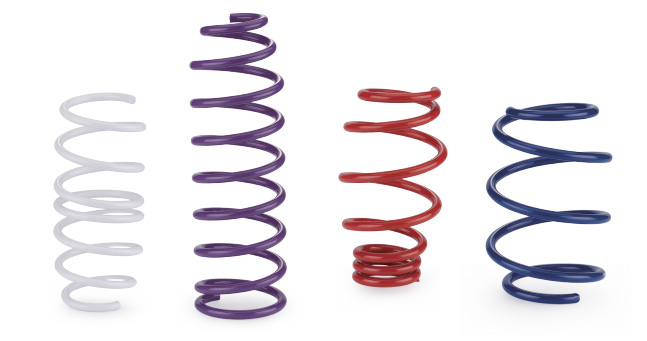
Product List
-
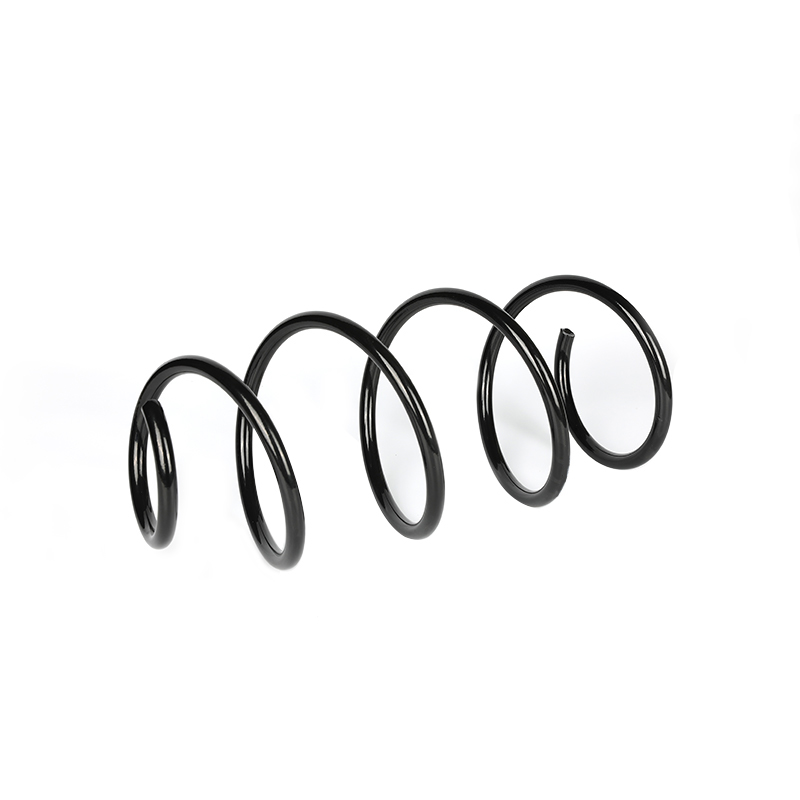
-
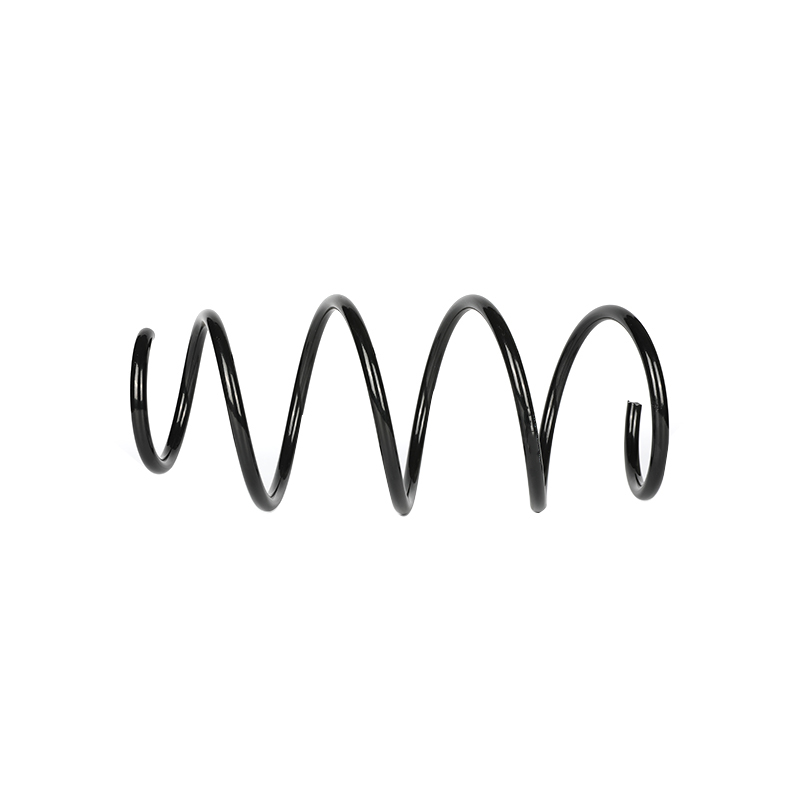
Automobile suspension spring
-
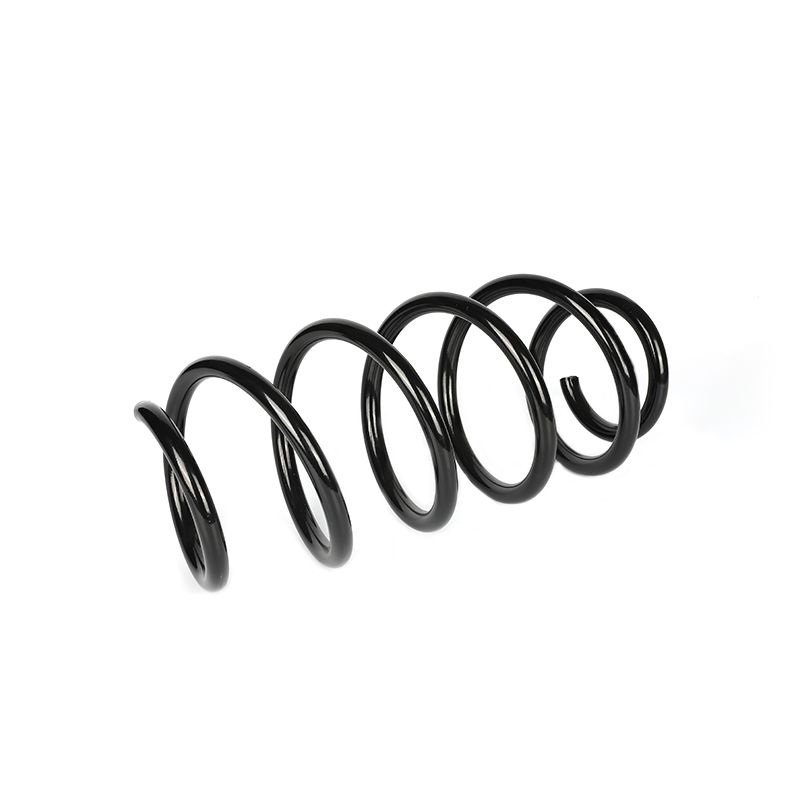
Automobile suspension spring
-
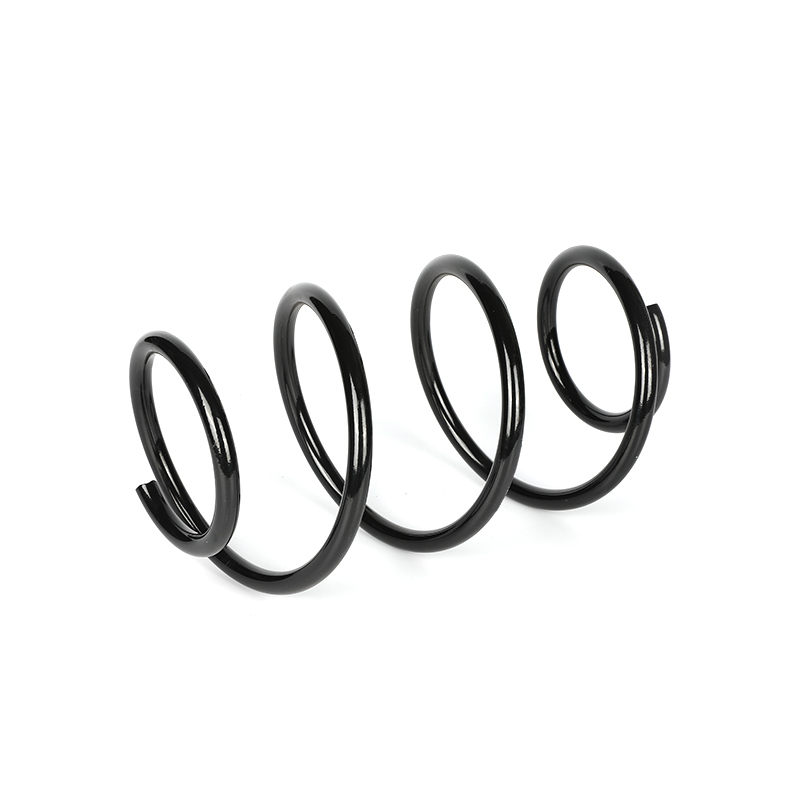
Automobile suspension spring
-
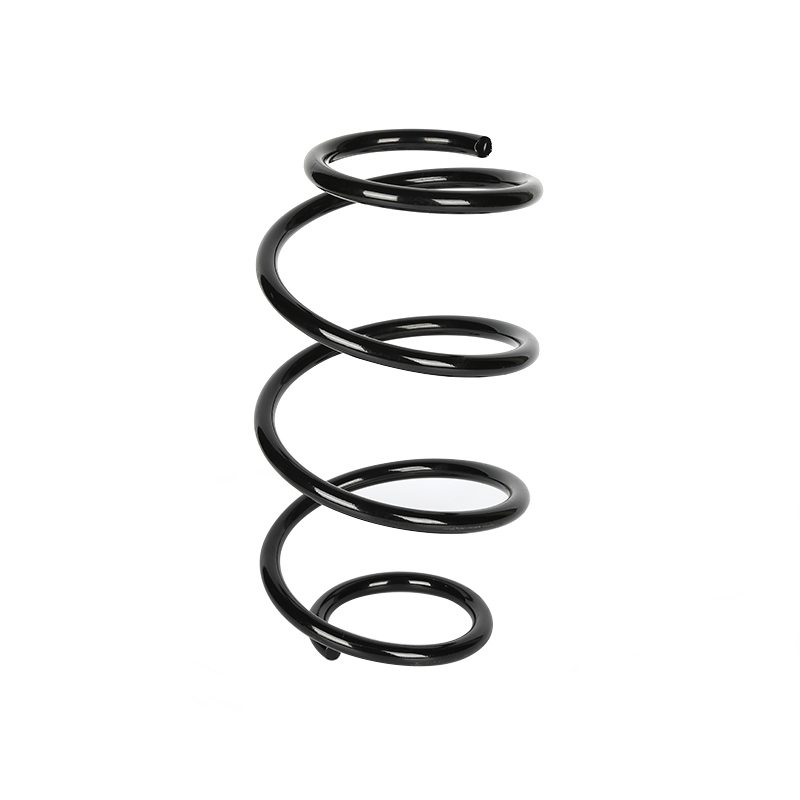
Automobile suspension spring
-
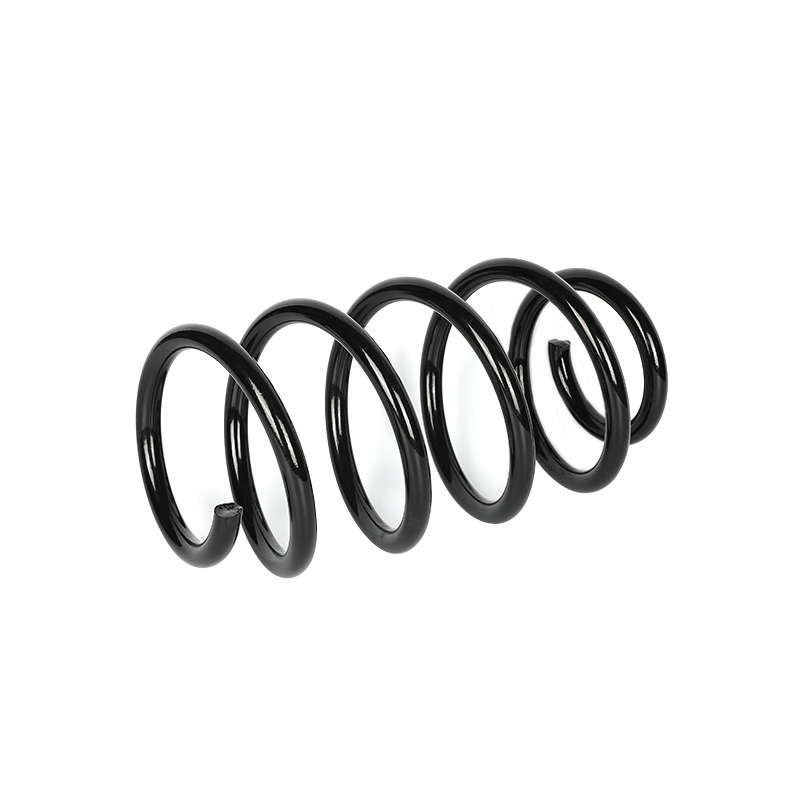
Automobile suspension spring
-
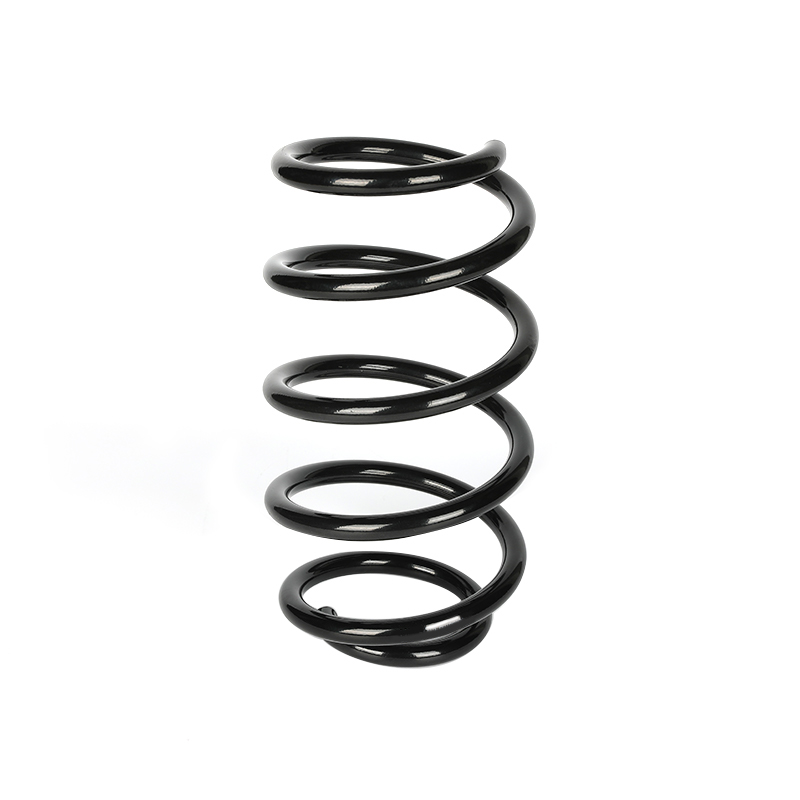
Automobile suspension spring
-
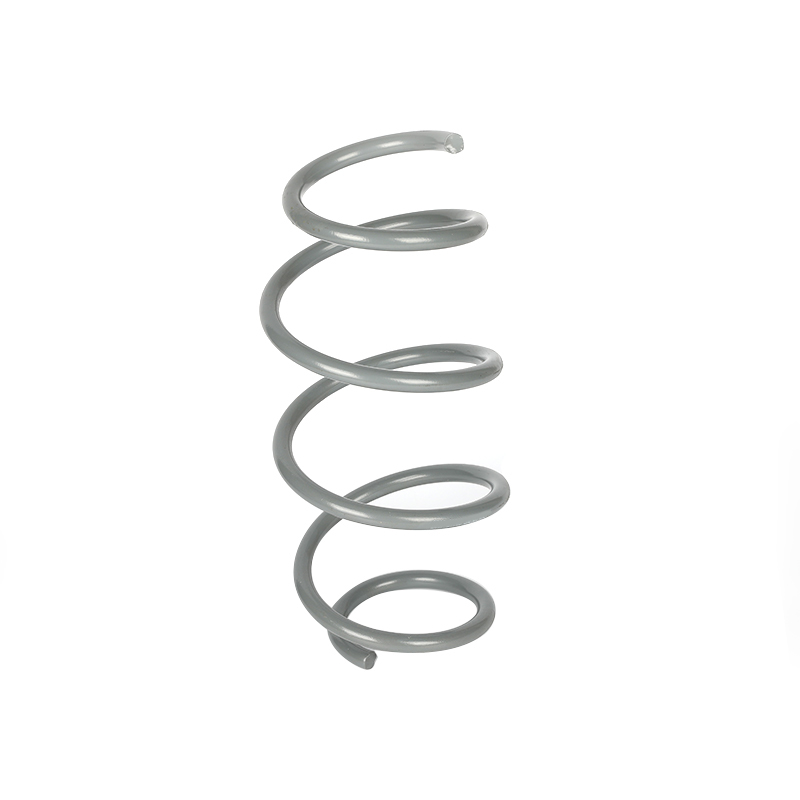
Automobile suspension spring
-
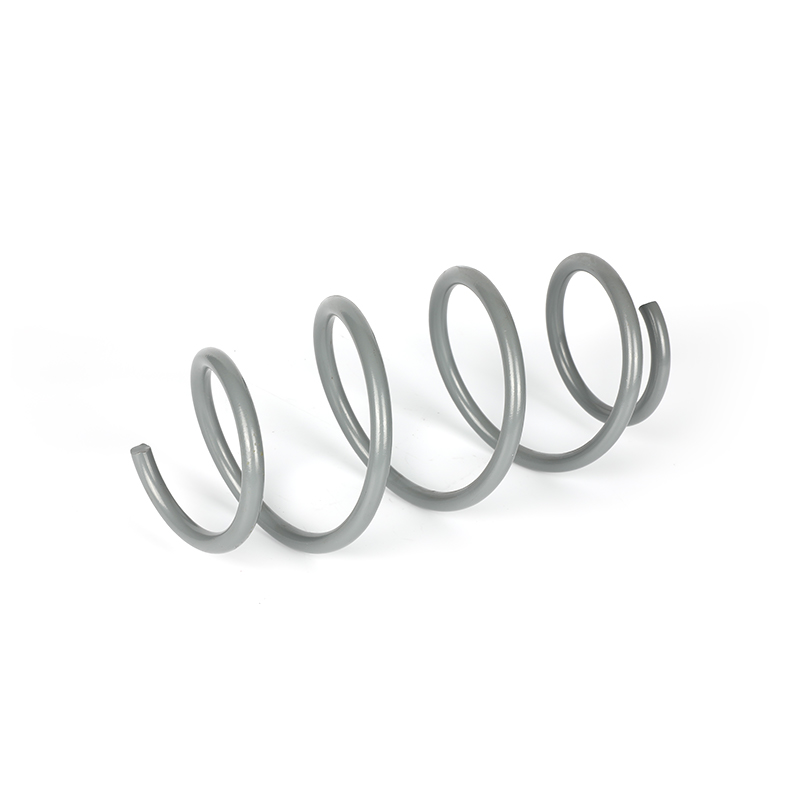
Automobile suspension spring
-

Automobile suspension spring
-
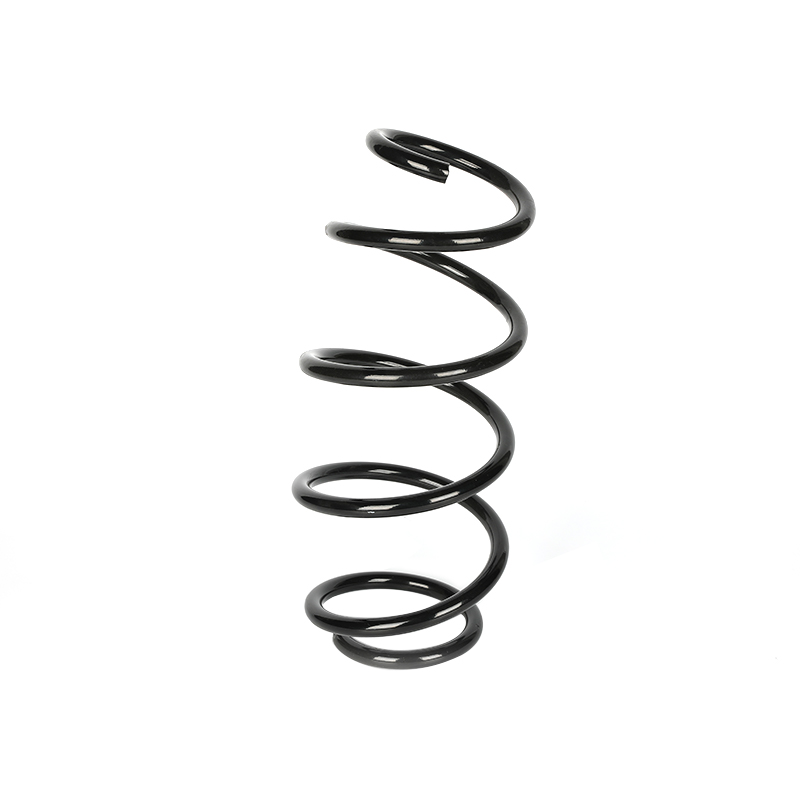
Automobile suspension spring
-
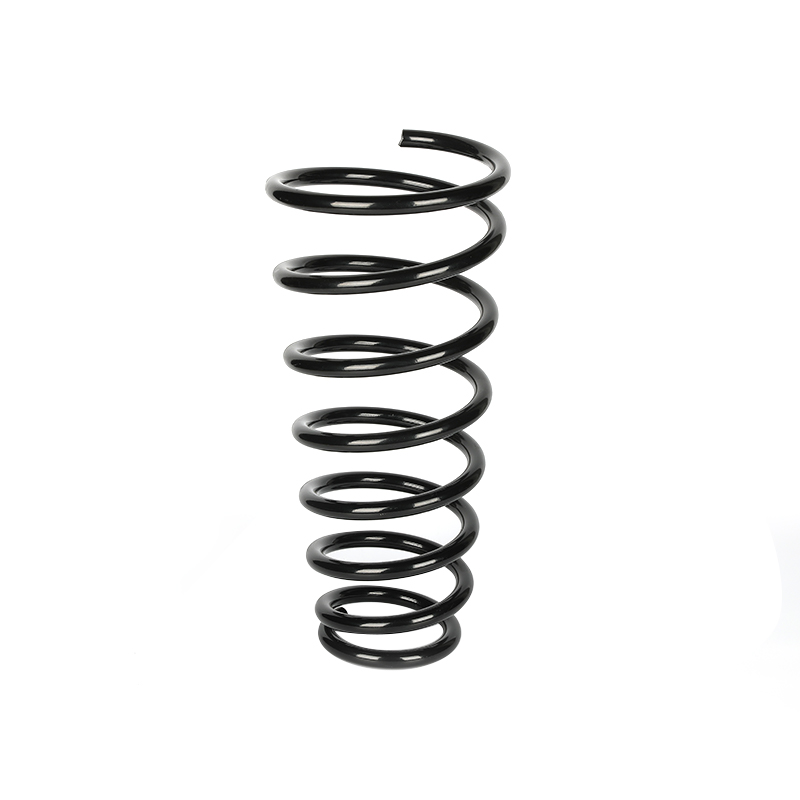
Automobile suspension spring

About Us
Zhejiang Zongheng Spring Co., Ltd. is China OE Replacement Car Suspension Springs Manufacturers and OE Replacement Car Suspension Springs Suppliers, was established in 2021 and is a production-oriented enterprise specializing in the design and manufacture of brake system springs, suspension system springs, and general spiral springs. The company is located in Fengqiao, Zhuji, Zhejiang, covering an area of 30,000 square meters. The company uses high-quality raw materials from domestic and foreign sources and has advanced heat treatment, coiling, shot blasting, shaping, and surface treatment equipment. The production process is implemented according to the IATF/TS16949 international quality management system, and the company is committed to implementing 6S management and digital production processes to provide quality and reasonably priced products and services to domestic and foreign markets. The company is constantly researching and surpassing in the direction of high strength, lightweight, and high fatigue life. The company has a complete laboratory and has introduced advanced testing equipment such as spectrometers, online flaw detectors, image analyzers, tensile testing machines, fatigue testing machines, multi-functional sand and stone impact testers, lateral force load testers, etc., allowing customers to understand the product characteristics of each batch. We adhere to the quality policy of "precision in work and integrity in the product", inherit the "craftsman spirit" and strive to make every spring well. We look forward to exchanging and cooperating with customers at home and abroad for mutual development.
Certificate
-
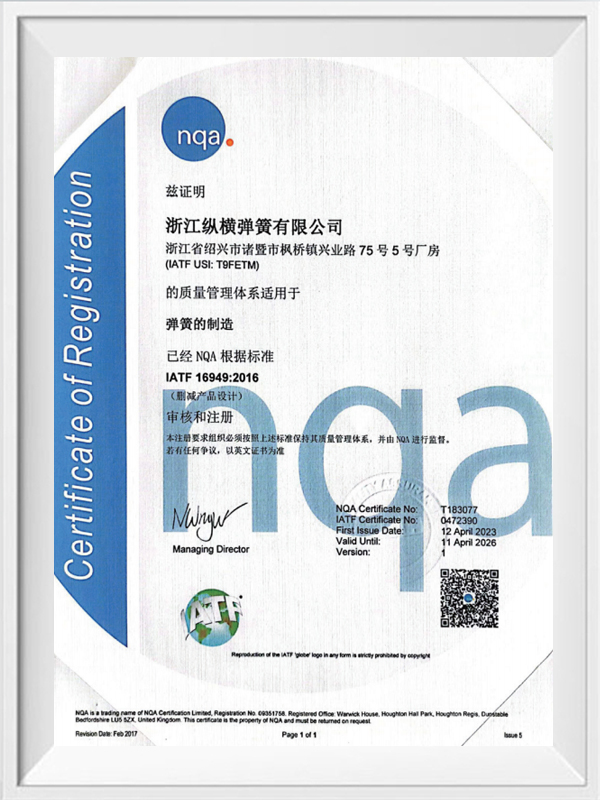 IATF 16949:2016
Latest News
-
Knowledge 2026-09-22
The spring constant of a car suspension is the force needed to compress the suspensi...
Read More -
Knowledge 2026-09-14
When the front of your car sits noticeably lower on one side, or the steering wheel ...
Read More -
Knowledge 2026-09-11
The spring constant of a car suspension spring—also known as the spring rate or stif...
Read More -
Knowledge 2026-09-04
Here is the practical answer you need before you order parts: springs carry the vehi...
Read More -
Knowledge 2026-08-24
A coil spring suspension system is a vehicle suspension design that uses helically w...
Read More
-
 Automobile Suspension Spring
1. Our automotive suspension springs are made with advanced manufacturing technology and are precisely designed to ensure smooth d...
-
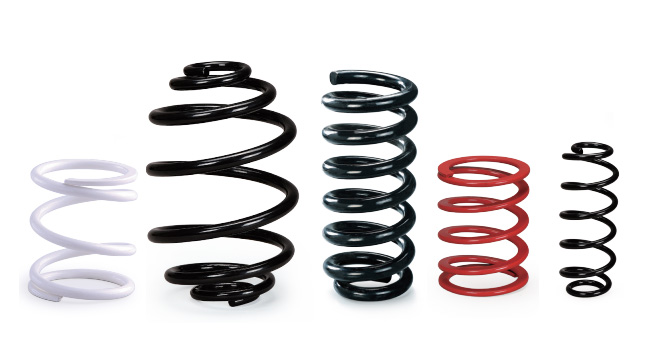 Modified Car Suspension Spring
1. Advantages of off-road vehicle modified suspension springsHigh-strength load-bearing capacity: Our off-road vehicle suspension ...
-
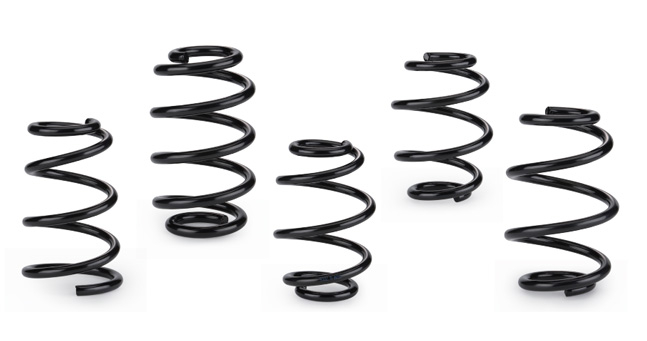 Brake Spring
1. Brake springs play an important role in ensuring the stability of the brake chamber and brake system.Precision manufacturing an...
Contact Us Now
OE Replacement Car Suspension Springs Industry knowledge
1. Overview
OE replacement car suspension springs are aftermarket coil springs manufactured to match the dimensional, load, and performance specifications of the Original Equipment (OE) spring fitted to a specific vehicle model at the time of manufacture. When a vehicle's suspension spring fails — through fatigue fracture, corrosion-induced cracking, or permanent set — the replacement spring must replicate the OE specification precisely to restore the vehicle's designed ride height, load-carrying capacity, and handling behavior.
Zhejiang Zongheng Spring Co., Ltd., based in Fengqiao, Zhuji, Zhejiang Province, manufactures suspension system springs with a focus on high strength, lightweight design, and high fatigue life. Production operates under the IATF/TS16949 quality management system, providing the process controls required for OE-equivalent replacement spring production.
2. What OE Specification Covers
An OE replacement spring is defined by a set of parameters that must be replicated to ensure the vehicle's suspension geometry and load distribution remain within design limits:
| Parameter | Description |
| Free length | Unloaded axial length; determines ride height when installed |
| Outer / inner diameter | Must fit within the strut or spring perch without contact interference |
| Wire diameter | Defines the spring rate and stress level at operating load |
| Spring rate (N/mm) | Load per unit deflection; must match OE to preserve suspension tuning |
| End configuration | Closed and ground, pigtail, tapered, or open ends to match seating geometry |
| Coil geometry | Variable pitch, barrel, conical, or cylindrical profile per OE design |
| Material and heat treatment | Steel grade and hardness range that achieve the required fatigue life |
3. Common OE Suspension Spring Types
3.1 Cylindrical Coil Springs
The most common suspension spring form, with constant outer diameter and either constant or variable pitch along the coil axis. Constant-pitch cylindrical springs produce a linear load-deflection curve and are found across a wide range of passenger car front and rear suspension systems. Variable-pitch cylindrical springs produce a progressive rate, where rate increases as coils close during compression.
3.2 Barrel and Mini-Barrel Springs
Barrel springs have a larger coil diameter in the center than at the ends, creating a compact installed height and progressive rate characteristic. Mini-barrel springs are a shorter-height variant used in space-constrained suspension layouts, commonly in rear axle applications on compact and mid-size passenger cars.
3.3 Conical Springs
Conical springs taper from a large diameter at one end to a smaller diameter at the other. They offer a very low solid height because smaller coils can nest inside larger ones during full compression. They are used in rear suspension applications where maximum compression travel within a short available space is required.
3.4 Pigtail End Springs
Springs with a pigtail end feature a tapered and curved terminal coil that seats into a matching cup in the suspension strut. This end form is specified by many vehicle manufacturers for front MacPherson strut applications to control spring lateral force and reduce bind in the strut assembly.
4. OE Replacement vs. Non-OE Aftermarket Springs
| Aspect | OE Replacement Spring | Non-OE Aftermarket Spring |
| Dimensional conformance | Matched to OE drawing or reverse-engineered to OE tolerance | May vary; fitment compatibility not guaranteed across all variants |
| Spring rate | Matches OE specification | May differ, altering ride height and handling characteristics |
| Material grade | Equivalent to or exceeds OE material specification | Variable; dependent on supplier quality controls |
| Fatigue life validation | Tested to defined cycle targets under OE stress conditions | Testing scope varies by supplier |
| Quality system | IATF 16949 or equivalent automotive standard | ISO 9001 or unspecified |
| Intended use | Restore vehicle to OE suspension performance | Modified ride height, tuning, or cost-driven substitution |
5. Manufacturing Process for OE Replacement Springs
Producing a spring that meets OE-equivalent performance requires disciplined process control at each stage:
- Material verification: Incoming wire is checked by spectrometer for chemical composition conformance to the specified alloy grade, and tensile properties are confirmed before coiling begins.
- CNC coiling: Automated coiling machines form the wire to the specified helix geometry, controlling pitch, diameter, free length, and end configuration within defined tolerances for each vehicle application.
- Heat treatment: Quench and temper cycles are controlled to achieve the hardness and tensile strength specified for the wire grade, directly determining fatigue performance.
- Shot peening: Controlled shot peening introduces compressive residual stresses at the wire surface, extending the high-cycle fatigue life to levels required for automotive service.
- Presetting: Each spring is compressed to a load beyond its operating range to stabilize free length and load characteristics, preventing in-service set after installation.
- Surface treatment: Coating or painting is applied to provide corrosion protection appropriate to the vehicle's operating environment. Corrosion is a primary cause of suspension spring fracture in service.
- Load and dimensional inspection: Finished springs are measured for free length, outer diameter, and load at defined heights to verify conformance to the OE specification before release.
6. Testing and Validation
Zongheng Spring operates a complete laboratory equipped with instruments that address the key failure modes of suspension springs:
- Fatigue testing machine: subjects finished springs to defined cyclic stress amplitudes representative of suspension loading to validate life targets.
- Tensile testing machine: confirms wire mechanical properties including tensile strength, yield strength, and elongation after heat treatment.
- Online flaw detector: identifies surface and near-surface defects that could act as fatigue crack initiation sites in the finished spring.
- Multi-functional sand and stone impact tester: evaluates coating and surface integrity under road debris impact conditions representative of the spring's operating environment.
- Lateral force load tester: measures the lateral force generated by the spring at operating height, which influences strut bearing load and steering feel in front suspension applications.
- Image analyzer and spectrometer: support material verification and microstructural examination for quality traceability.
7. Frequently Asked Questions
Q: How is a suspension spring identified for OE replacement purposes?
Replacement springs are cross-referenced by vehicle make, model, year, engine variant, and suspension variant (where multiple suspension options were offered). The OE part number of the original spring can also be used to confirm the correct replacement specification. Dimensional and load data should be verified against the target vehicle's service documentation where available.
Q: Should both springs on an axle be replaced at the same time?
Replacing both springs on the same axle at the same time is the standard industry practice. A used spring on one side will have lost some of its free length through fatigue set, while a new spring on the other side restores full ride height. The resulting side-to-side height difference affects suspension geometry, steering alignment, and handling balance. Replacing in pairs eliminates this discrepancy.
Q: What are the primary causes of suspension spring failure in service?
Corrosion-induced fatigue is the most common cause in markets with salted road surfaces. Road debris damage to the coating allows moisture and salt to contact the wire surface, initiating corrosion pits that act as fatigue crack sites under cyclic suspension loading. Pure fatigue fracture without corrosion can also occur when a spring operates beyond its design stress range due to overloading or incorrect replacement specification. Visible indicators include a reduction in ride height on one corner of the vehicle or audible spring contact at full suspension travel.
Q: Does an OE replacement spring require wheel alignment after installation?
Yes. Replacing a suspension spring changes the installed height of the suspension, which alters the suspension geometry angles including camber and toe. A wheel alignment check and adjustment after spring replacement is standard practice and is required to restore the vehicle's steering and tyre wear characteristics to specification.
Q: What documentation is available to verify the spring specification for each batch?
Under the IATF/TS16949 quality system, batch-level traceability records covering material certificates, heat treatment records, dimensional inspection results, and test data are maintained for each production run. Customers can obtain batch-specific quality documentation to confirm that the delivered product conforms to the agreed specification. The testing equipment installed at Zongheng Spring's laboratory allows product characteristics to be confirmed for each batch supplied.
Zhejiang Zongheng Spring Co., Ltd. | Fengqiao, Zhuji, Zhejiang Province, China | Established 2021
This document is prepared for general industry reference. Specifications and process details are indicative and subject to confirmation for each product application and vehicle fitment.
INQUIRE NOW
CONTACT US

- ADD: No. 75 Xingye Road, Fengqiao Town, Zhuji City, Zhejiang Province, China
- Tel: +86-575-87599266
- Mob: +86-13675761610
- Email: [email protected]
