

 English
 中文简体
 Deutsch
 Español
A brake chamber spring is a safety device, not a wear part you can rebuild on the bench. That single point settles most purchasing and maintenance questions around it: when the spring inside a spring brake chamber weakens or corrodes, you replace the complete chamber assembly — you do not open the clamp band and swap the spring.
The spring stores the energy that holds a parked truck, bus or trailer still when there is no air pressure in the system. It is compressed every time the parking brake is released and it stays compressed for the whole shift, which is why corrosion, heat and fatigue matter far more here than in an ordinary compression spring.
What follows covers what the spring does, how it fails, the symptoms that justify replacement, and the specifications worth writing into a purchase order.
Content
- What a Brake Chamber Spring Does Inside the Chamber
- How the Spring Applies and Releases the Parking Brake
- Why Brake Chamber Springs Fail
- Symptoms That Point to a Failing Brake Chamber Spring
- What to Specify When Buying Brake Chamber Springs
- Materials, Heat Treatment and Validation
- Installation and Maintenance Practices That Extend Spring Life
- Frequently Asked Questions
What a Brake Chamber Spring Does Inside the Chamber
Its only job is to apply the brake when air pressure is gone. A brake chamber spring is the large compression spring in the parking section of a spring brake chamber, and it works against the air pressure that keeps the parking brake released. It is not a return spring and it is not a trim component: it is the part that keeps a loaded vehicle stationary on a grade if the air system bleeds down or a line fails.
Air-braked vehicles combine two functions in one housing. The service section uses compressed air to push a diaphragm and apply the brakes while driving. The spring section does the opposite — stored spring force is the default state, and air pressure is what holds the brake off. That inversion is why the spring is under load almost continuously.
| Characteristic | Service brake section | Spring (parking) section |
|---|---|---|
| What applies the brake | Compressed air acting on a diaphragm | Stored force in a heavy coil spring |
| State with no air pressure | Brake released | Brake applied |
| Internal spring | Light return spring only | Main compression spring, oil-tempered alloy wire |
| How it is released | Air pressure is exhausted | Air pressure is built up to compress the spring |
| Common type sizes | Type 9 to type 30 | Type 20, 24 and 30 on double-diaphragm units |
| Field service | Diaphragm and clamp may be renewed | Complete chamber replacement only |
How the Spring Applies and Releases the Parking Brake
Air pressure releases the parking brake and only spring force applies it, so every behaviour below follows from that one design choice.
- Charging — the compressor raises system pressure to roughly 100 to 120 psi; air enters the spring chamber and pushes a piston that compresses the spring.
- Driving — the spring stays compressed at its installed height, often for the entire working day. It carries its highest load while the vehicle is moving, not while it is parked.
- Parking — the park valve exhausts the spring chamber and the spring extends, pushing the pushrod out to apply the brake.
- Emergency application — if system pressure falls below the protection threshold, commonly in the 40 to 45 psi range depending on valve and chamber, the spring applies the brake automatically.
- Manual caging — a caging bolt compresses the spring mechanically so a vehicle can be moved without air. It is a temporary service tool, not a repair, and it must be released before the vehicle returns to service.
Why Brake Chamber Springs Fail
Moisture and corrosion end most brake chamber springs long before the design load does. The spring is a high-stress part sitting in a wet, oil-contaminated housing, and the wire surface is where failure starts.
- Condensation and water ingress: air systems carry moisture that collects at the lowest point of the chamber and pits the wire.
- Compressor oil carry-over: oil contaminates rubber parts and can soften or lift coatings.
- Continuous load: holding installed height for months encourages residual deformation and load loss.
- Fatigue cycling: every park-and-release cycle is a full stroke from installed height towards free length.
- Diaphragm or seal failure: a split diaphragm lets water, grit and oil reach the spring directly.
- Over-stroke and mechanical damage: pushrod overtravel, a bent caging bolt or a distorted housing all change the stress pattern.
- Heat: repeated heavy stops soak brake heat into the chamber.
A pit in the wire surface is a stress concentration. Under cyclic load a crack starts there and grows until the spring loses load or breaks. A sagged spring does not always look broken either — it simply stops holding the vehicle, and the driver reports a park brake that creeps on a slope.
Safety note: a compressed spring brake spring stores enough energy to cause serious injury or death. Never loosen the clamp band on a spring brake chamber and never attempt to remove the spring. Replace the chamber as a sealed assembly.
Symptoms That Point to a Failing Brake Chamber Spring
If the park brake will not hold on a grade, releases slowly, or the chamber will not hold air, treat it as a spring chamber fault until diagnosis proves otherwise.
- The park brake does not hold on a slope with the control applied.
- Slow or incomplete release after start-up, with the vehicle dragging for several seconds.
- An audible leak at the chamber, or a pressure drop that only occurs with the park brake released.
- Pushrod stroke outside the adjustment limit, or a pushrod that fails to return.
- Rust staining, a cracked housing or a distorted clamp band.
- A caging bolt that will not stay seated, which usually means the spring has lost preload.
- Repeat diaphragm failures on the same wheel end, a sign that contamination is coming from the spring side.
What to Specify When Buying Brake Chamber Springs
The dimensions that decide performance are measured under load, not on the bench. Free length alone says very little about a brake chamber spring.
| Parameter | Why it matters | What to confirm |
|---|---|---|
| Wire diameter | Sets load capacity and stress level | Tolerance band, for example plus or minus 0.05 mm on heavy gauge wire |
| Installed load | Determines the parking brake force | Load at installed height, plus permitted loss after cycling |
| Spring rate | Controls stroke behaviour and release pressure | A stated rate in N/mm with a tolerance, commonly around 10 percent |
| Material grade | Fatigue and sag resistance | Oil-tempered or silicon-chromium alloy wire with a mill certificate |
| Shot peening | Raises the fatigue limit | Coverage and intensity recorded per batch |
| Coating | Corrosion protection inside a wet chamber | Salt spray hours and coating thickness |
| Fatigue validation | Proof of cycle life | A test report against an agreed cycle count |
Two purchase risks are worth naming. The first is a spring supplied to free length and wire diameter only, with no installed-load figure: it may fit perfectly and still fail to hold the vehicle. The second is a coating chosen for appearance rather than for a wet chamber interior, which shows up as pitting within a couple of winters.
Materials, Heat Treatment and Validation
Wire grade, heat treatment and shot peening do more for spring life than any single dimension. A brake chamber spring normally uses oil-tempered or silicon-chromium alloy wire that is formed, stress-relieved, shot peened and coated before it is assembled into the chamber.
Heat treatment sets the balance between hardness and toughness, shot peening puts the wire surface into compression so cracks start later, and a phosphate or epoxy coating buys time against condensation. Because none of these steps is visible in a finished chamber, the only real evidence is documentation: material certificates, peening records and fatigue test reports per batch.
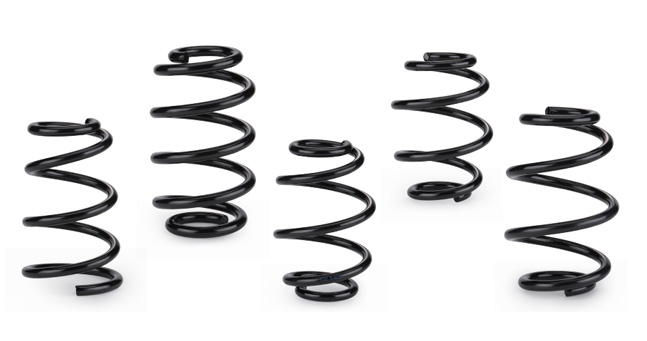 Brake Chamber Springs for Commercial VehiclesCompression springs for air brake chambers, with alloy steel, heat treatment, shot peening and batch test documentation for commercial vehicle applications.View Product →
For buyers working to IATF/TS16949 or an equivalent automotive quality system, ask for the process route and validation data with the quotation rather than after the first failure. A spring maker that runs its own fatigue, salt spray and load testing can show batch-level results, and that is also the practical way to compare suppliers on something other than price. How the process changes the metallurgy is covered in this look at brake spring heat treatment.
Installation and Maintenance Practices That Extend Spring Life
Most premature spring failures trace back to air system hygiene and installation detail rather than to the spring itself.
- Drain the air tanks and dry the system before fitting a new chamber; a chamber fed with wet air corrodes from the first day.
- Check pushrod length and clevis adjustment, because an over-stroked chamber loads the spring beyond its design range.
- Fit new mounting hardware to the specified torque so the pushrod geometry stays correct.
- Confirm release pressure after installation; the brake should release fully at normal system pressure with no drag.
- Service the air dryer and replace desiccant on schedule, and repair compressor oil carry-over when it appears.
- Remove the caging bolt before the vehicle returns to service, and never treat it as a permanent lock.
- Record chamber type and fitting date so repeat failures on the same wheel end are noticed.
Frequently Asked Questions
Can the spring inside a spring brake chamber be replaced on its own?
No. The chamber is a sealed assembly and the compressed spring holds enough stored energy to injure or kill anyone who opens the clamp band. Replace the whole chamber.
How long should a brake chamber spring last?
There is no fixed interval, because life depends on moisture, cycle count and coating quality. In a dry, well-maintained system a chamber often lasts several years; where the air dryer has failed, corrosion can end it within months.
How do I tell a failed spring from a failed diaphragm?
Diaphragm failure usually shows as an air leak or a service brake that will not apply fully. Spring problems show as a park brake that will not hold or releases slowly. If both appear, or the same wheel end fails twice, replace the chamber.
Does a heavier spring give stronger parking performance?
No. The spring is matched to the chamber type and its effective area, and a stiffer spring changes release pressure and stroke, which can cause drag. Specify the original chamber type, such as type 20, 24 or 30, instead of a stronger spring.
What causes a spring brake to drag after release?
Usually low system pressure, a restricted line to the chamber, a swollen seal, or a spring that has lost rate through corrosion or sag. Check release pressure at the chamber before replacing parts.
The brake chamber spring is a small share of a bill of materials and a large share of the safety case for any air-braked vehicle. When you buy, specify installed load, rate tolerance, wire grade, peening and coating, then insist on batch test data. When you maintain, keep water out of the system and replace chambers as sealed units. That combination is what keeps a parking brake holding on a grade after several winters of service.
If you are sourcing springs for brake chamber assembly or repair kits, you can review the full brake spring range and send your drawings together with the load, cycle and corrosion requirements they have to meet.