



 English
 中文简体
中文简体 Deutsch
 Español
How Should Leaf Springs Look? Visual Guide to Normal vs. Bad Leaf Springs
Aug 07, 2026
Content
What Is a Leaf Spring and Why Does Its Appearance Matter?
A sagging rear corner is usually the first sign that a leaf spring is in trouble. Lift the truck and look along the pack, and you will often find the cause: a flattened arch, flaking rust, or a crack that started months earlier. Leaf springs rarely fail without leaving visible clues, and their appearance is the most reliable way to judge their condition before a breakdown.
A leaf spring pack is a stack of curved steel strips called leaves. The longest strip, the main leaf, has its ends rolled into eyes that bolt to the frame through rubber bushings. A center bolt passes through the middle of the stack to keep the leaves aligned, while rebound clips along the length stop the leaves from separating when the suspension unloads.
The pack does three jobs at once: it carries the weight of the vehicle, it positions the axle from side to side, and it flexes to absorb impacts from the road. Because all three depend on the steel keeping its intended shape, the outside appearance of the spring is your first signal of its internal health. Fatigue from millions of load cycles, damage from years of overloading, and corrosion from winter road salt all leave visible marks before a spring actually fails.
How Should a Normal Leaf Spring Look?
A normal leaf spring is neither perfectly clean nor perfectly straight. It is a gently curved steel assembly with a consistent shape from eye to eye. Work through the checklist below and compare it with your own springs.
The healthy leaf spring checklist
- Arch. The pack should curve smoothly from one end to the other, with no kinks, flat spots, or sections where the curve suddenly reverses. Both springs on the same axle should show the same arch, and the vehicle should sit level side to side.
- Leaf alignment. From the side, the stack should look like a single tapered beam. The leaves should sit flush against one another, with visible gaps only at the tapered tips.
- Surface condition. Light surface rust is acceptable, especially on older vehicles and in regions where roads are salted. The steel beneath that rust should be sound: no deep pits, no scaling, and no flakes lifting off the surface.
- Eyes and bushings. Both rolled eyes should be intact with no hairline cracks. The rubber bushings inside the eyes should feel firm and elastic, with no tears, chunks missing, or hardening.
- Center bolt and rebound clips. The center bolt head should sit flush in its recess. Rebound clips should be straight, securely attached, and in their original positions along the pack.
When a spring passes these checks, it still has the geometry and material strength needed to carry its rated load and deliver predictable ride quality. That standard is your baseline for spotting deterioration. When springs lose that shape, the ride changes first—our guide on how OE replacement springs restore factory ride quality explains the connection in more detail.
In short, a normal spring has three non-negotiables: a proper arch, tight leaf contact, and a structurally sound steel surface.
Visual Signs That Your Leaf Springs Are Failing
Leaf springs fail in predictable patterns, and each failure mode leaves characteristic traces. Recognizing the five warning signs of suspension spring fatigue early costs far less than replacing a damaged axle housing or a broken frame bracket. The table below sets the normal appearance beside the appearances that call for action.
| Feature | Normal appearance | Signals trouble |
|---|---|---|
| Arch | Smooth, even curve from eye to eye; matched by the spring on the opposite side | Flat or inverted curve; the vehicle sits low on one corner |
| Leaf stack | Leaves tightly stacked and aligned | Leaves spread apart, twisted, or shifted sideways |
| Steel surface | Light surface rust only; sound steel underneath | Deep pits, flaking scale, or cracks running across a leaf |
| Eyes and bushings | Eyes crack-free; rubber bushings firm and elastic | Cracked eyes, hardened or torn bushings, clunks from the pivot points |
| Center bolt and clips | Center bolt tight; rebound clips straight and in place | Broken center bolt with the pack fanning apart; bent or missing clips |
The two findings that require immediate replacement
A crack through any leaf is the first. Cracks concentrate stress and grow quickly under normal road loads; a crack across the main leaf can open completely on a single hard bump and leave the axle unsupported. A broken center bolt is the second. Without that bolt, the leaves shift independently, the axle loses its lateral location, and the pack can separate while you drive. Both conditions make the vehicle unsafe to use until the spring is replaced.
Gradual failures: sagging and corrosion
Sagging is the most common gradual failure. It develops over months as the leaves lose their camber. The rear of the vehicle sits low, the spring looks noticeably flatter than the opposite side, and the ride turns bouncy over undulations. A sagged spring has lost its designed load capacity and will keep settling, so replacement is a matter of time. If your driving regularly includes heavy payloads, this is also the point at which upgraded suspension springs for better handling become a reasonable investment.
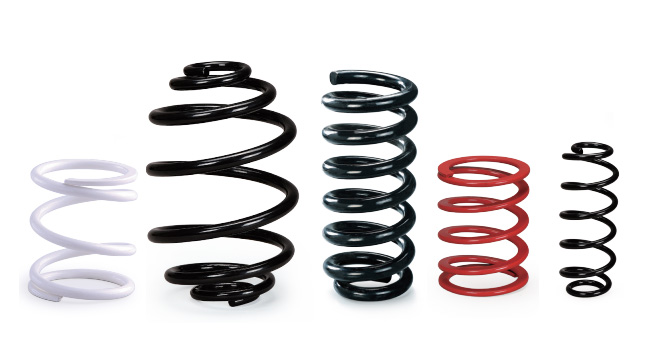 Modified Cars Off-Road Vehicles Suspension Springs ManufacturersZhejiang Zongheng Spring Co., Ltd. is Leading China manufacturer of wholesale suspension springs for modified cars & off-road vehicles. S...View Product →
Corrosion is the second gradual threat. Winter road salt attacks the interleaf surfaces, where you cannot see it. From the outside, you see pitting, scaling, and rust flakes around the edges of the leaves. Deep pits reduce the effective cross-section of the steel, and a corroded spring is far closer to fatigue failure than the same spring with only surface rust. If the pitting reaches into a leaf edge, treat it like a crack.
Behavioral clues also matter. A metallic clunk on broken pavement, a drifting sensation at the rear, or a vibration that appears only under load, combined with any suspicious visual sign, is reason enough to schedule a professional inspection.
How to Inspect Your Leaf Springs in 5 Steps
You do not need a lift or special tools for this check. Park on level ground, set the parking brake, have a wire brush and a flashlight ready, and allow about ten minutes. One inspection per year is enough for a vehicle used for commuting; trucks that tow, haul, or go off-road should be checked every three to six months, and the stance should be checked before any long trip.
- Make the vehicle safe. Chock the front wheels and confirm the parking brake is engaged. If you plan to remove a wheel, support the axle on jack stands before reaching underneath.
- Read the stance first. Stand a few steps behind the vehicle and compare the left and right arches. A spring that is broken or badly sagged will drop its corner of the vehicle by an inch or more.
- Clean the pack. Remove the rear wheels when practical, or work through the wheel opening if they stay on. Use the wire brush to clear mud, grease, and loose rust so the steel surface is readable.
- Inspect each leaf and both mounts. Look for cracks running across the width, deep pits, leaves that have shifted sideways, and bent rebound clips. Press each rubber bushing with a thumb—it should feel firm and spring back quickly.
- Compare with the healthy checklist. Every item should match the normal appearance described earlier. If anything is questionable, have a professional shop confirm the diagnosis before ordering parts.
Appearance does not tell the whole story. If the springs still look borderline normal but the ride has degraded, the decision guide on how to judge whether your suspension spring needs replacement covers the remaining criteria, including sag measurements and load testing.
Leaf Springs vs. Coil Springs: What This Means for Your Vehicle
Leaf springs remain the standard on pickup trucks, cargo vans, and trailers because a multi-leaf pack handles heavy loads with simple and durable construction. Coil springs dominate sedans and SUVs with independent rear suspension, where each wheel moves separately and needs its own spring and damper.
The inspection approach differs by type. A coil spring is judged by the condition of its protective coating, the spacing between coils, and any visible cracks or deformed sections. A chipped coating lets moisture reach the steel, and the rust that follows can grow into a crack over time. A leaf pack, as covered above, is judged by arch, leaf alignment, and surface condition.
Mechanically, both spring types follow the same fatigue rules. Every mile puts steel through load cycles, surface defects concentrate stress, and overloading shortens service life. That shared logic is why the manufacturing priorities for both types are identical: high strength, light weight, and high fatigue life.
If your truck's leaf springs are beyond repair, or you are replacing coil springs on a vehicle that already uses them, the new spring must match the original load rating and ride height. For the coil side of that decision, OE replacement coil suspension springs are engineered to restore factory ride quality while keeping the same safety margin. The visual standard remains simple: keep the arch, keep the leaves together, keep the steel sound—and a ten-minute check once a year will keep you ahead of most suspension failures.
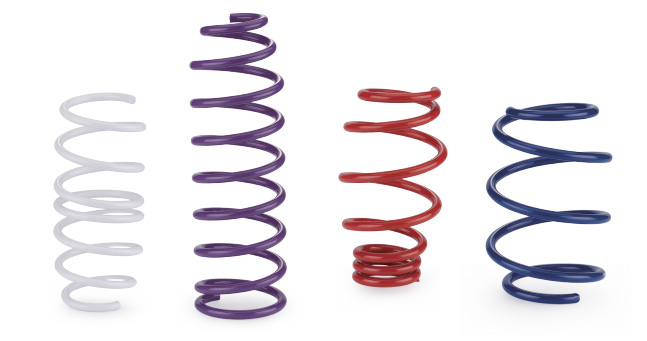 OE Replacement Car Suspension Springs Manufacturers, SuppliersZhejiang Zongheng Spring Co., Ltd. is a China OE Replacement Car Suspension Springs manufacturer and suppliers, Specializing in wholesale...View Product →
- ADD: No. 75 Xingye Road, Fengqiao Town, Zhuji City, Zhejiang Province, China
- Tel: +86-575-87599266
- Mob: +86-13675761610
- Email: [email protected]
Copyright © Zhejiang Zongheng Spring Co., Ltd. Rights Reserved. China automotive coil springs manufacturers Wholesale suspension springs factory
