



 English
 中文简体
中文简体 Deutsch
 Español
Brake Chamber Springs For Trucks Manufacturers
1. Brake springs play an important role in ensuring the stability of the brake chamber and brake system.
Precision manufacturing and high performance: Our brake springs are made of high-quality alloy steel, and through special heat treatment and fine processing, ensure that the springs have high compressive strength and can maintain stable performance under various conditions.
Improve the stability of the braking system: The brake springs precisely adjust the elasticity so that the brake chamber can work quickly and stably, ensuring that the truck has a reliable response speed and effect during the braking process.
Optimized design: We provide a variety of specifications and design solutions for brake springs, which can meet the needs of different models and use environments, and ensure that the brake system can achieve the braking effect.
Long-lasting and durable: Our brake springs adopt an anti-fatigue design, high-pressure resistance, and corrosion resistance, reduce spring wear, extend its service life, and reduce maintenance costs.
2. Comprehensive advantages of manufacturers
Advanced production equipment and technology: We have introduced advanced production equipment and manufacturing technology from home and abroad to ensure the accuracy and consistency of products, improve production efficiency, and meet the needs of mass production.
Comprehensive quality management system: The company has a complete quality management system, and strictly produces and inspects in accordance with the IATF16949 quality standard. Each product undergoes multiple inspections to ensure reliable quality.
Strong R&D capabilities: We have an experienced R&D team that can continuously innovate technology and optimize product design based on market demand and customer feedback.
Customer customized services: We provide a full range of customized services. We can provide customers with tailor-made product solutions for different models and different usage environments.
Complete after-sales service system: We provide customers with one-to-one technical support and after-sales service to ensure that every customer enjoys professional technical consultation and service support during use.
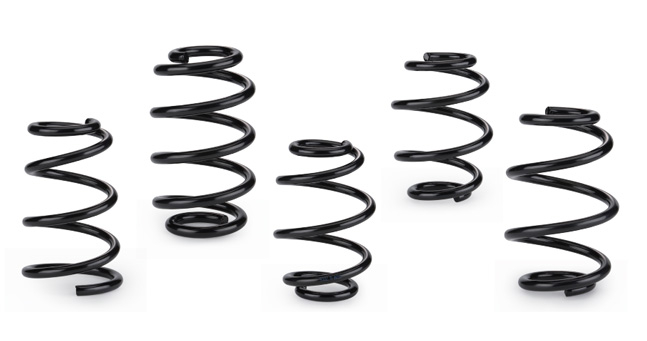
Product List
-
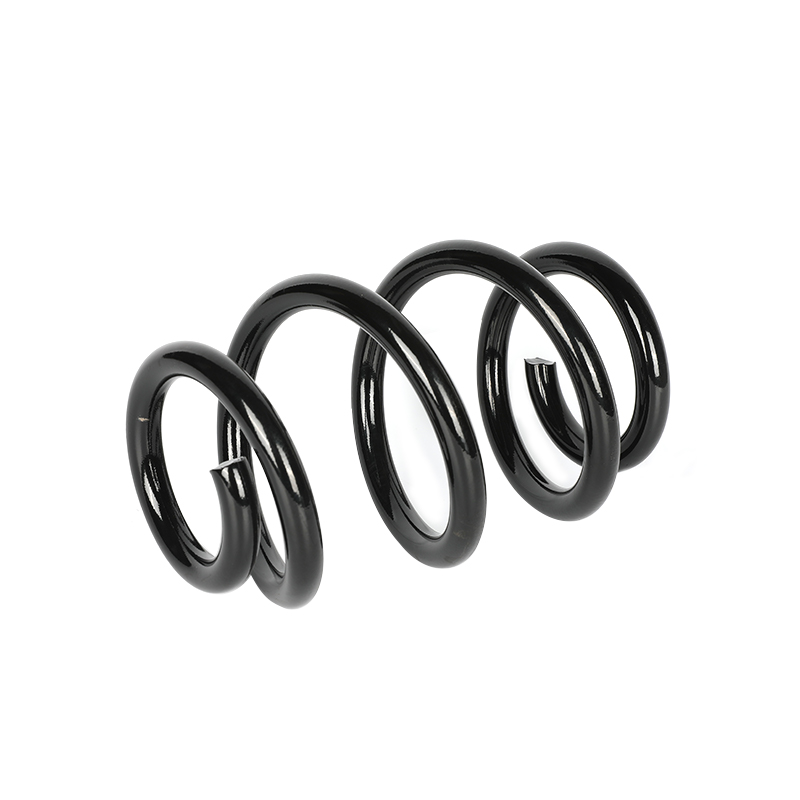
-
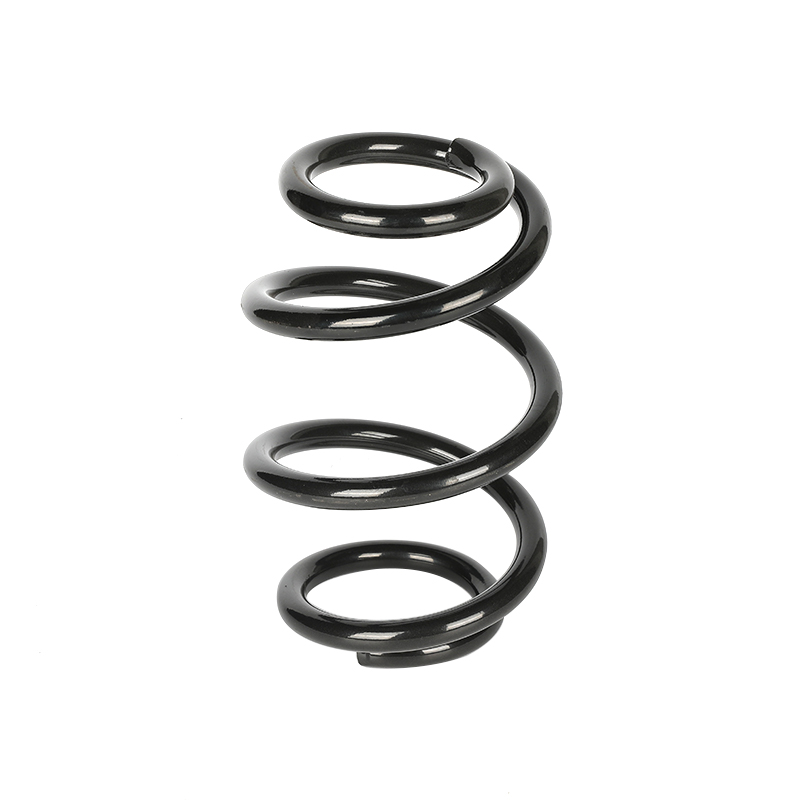
Brake spring
-
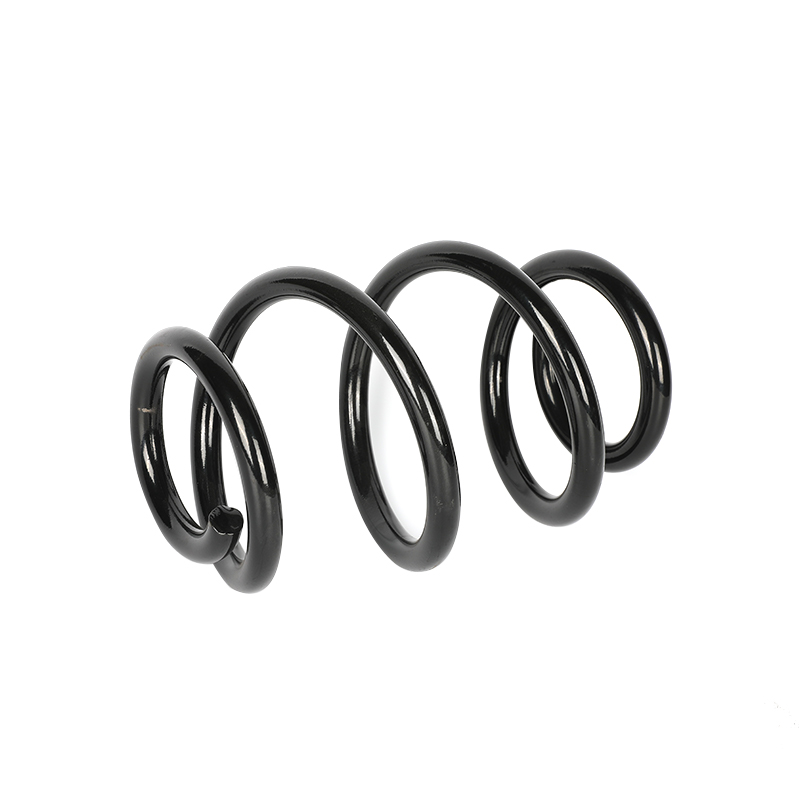
Brake spring
-
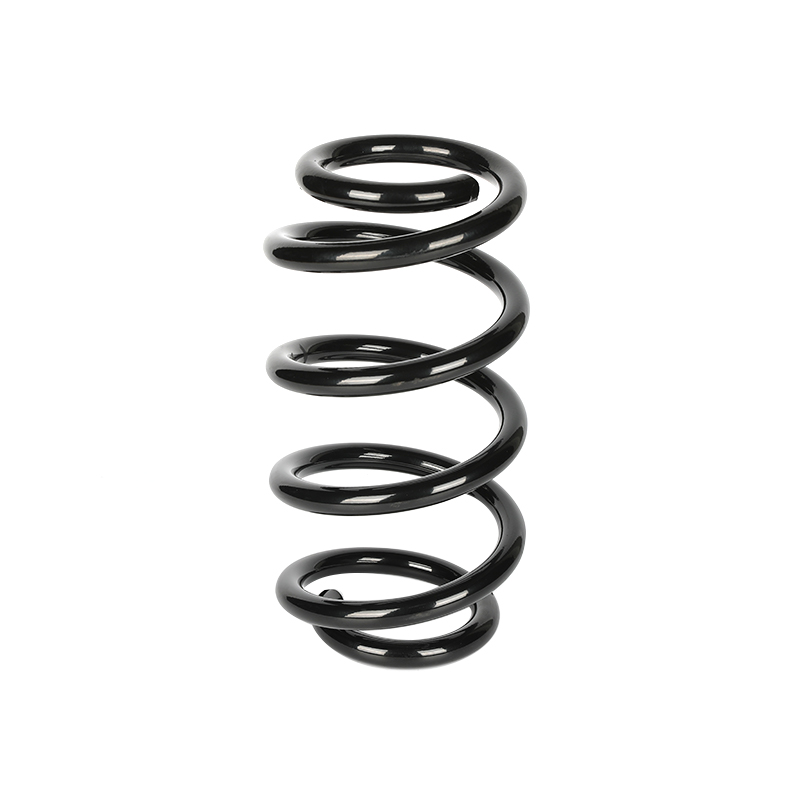
Brake spring
-
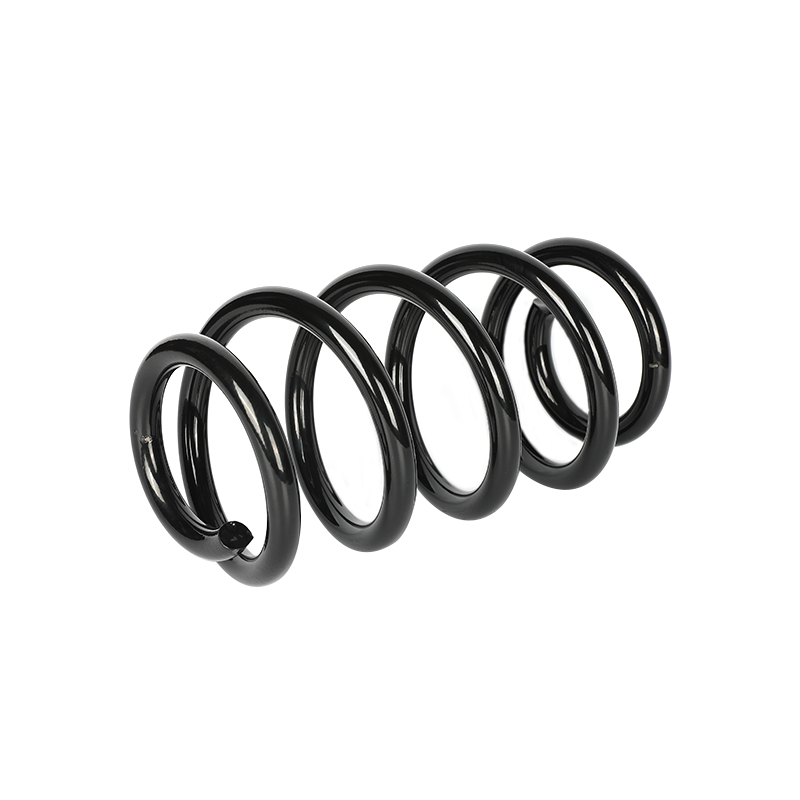
Brake spring
-
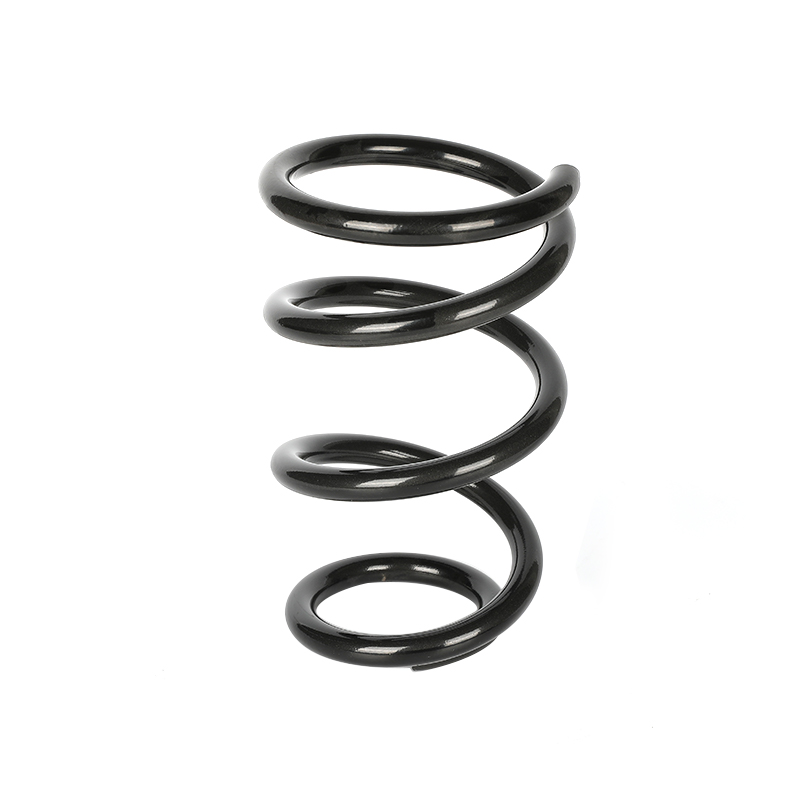
Brake spring
-
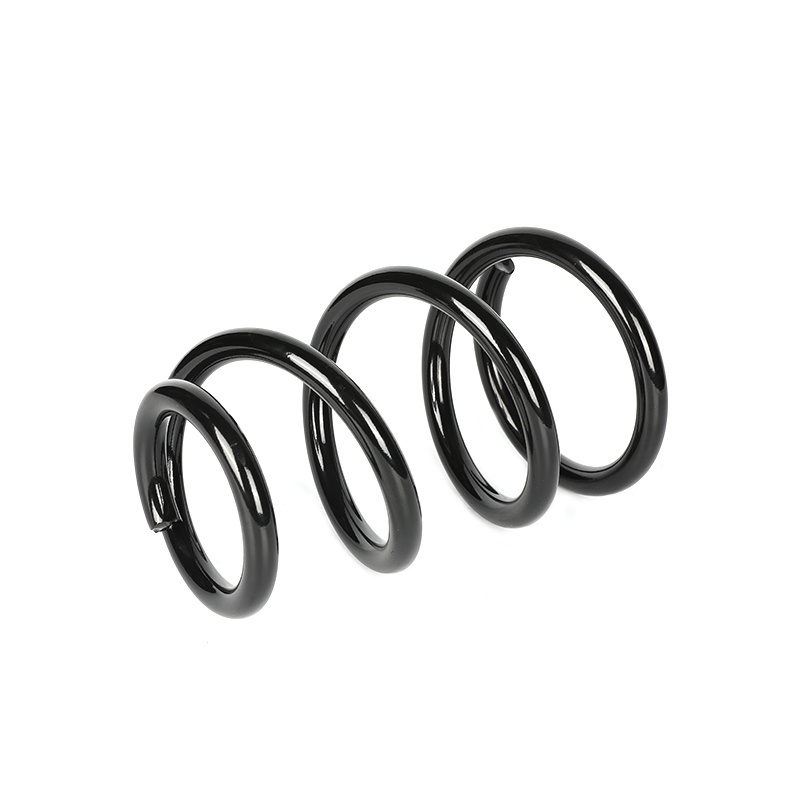
Brake spring

About Us
Zhejiang Zongheng Spring Co., Ltd. is China Brake Chamber Springs For Trucks Manufacturers and Brake Chamber Springs For Trucks Suppliers, was established in 2021 and is a production-oriented enterprise specializing in the design and manufacture of brake system springs, suspension system springs, and general spiral springs. The company is located in Fengqiao, Zhuji, Zhejiang, covering an area of 30,000 square meters. The company uses high-quality raw materials from domestic and foreign sources and has advanced heat treatment, coiling, shot blasting, shaping, and surface treatment equipment. The production process is implemented according to the IATF/TS16949 international quality management system, and the company is committed to implementing 6S management and digital production processes to provide quality and reasonably priced products and services to domestic and foreign markets. The company is constantly researching and surpassing in the direction of high strength, lightweight, and high fatigue life. The company has a complete laboratory and has introduced advanced testing equipment such as spectrometers, online flaw detectors, image analyzers, tensile testing machines, fatigue testing machines, multi-functional sand and stone impact testers, lateral force load testers, etc., allowing customers to understand the product characteristics of each batch. We adhere to the quality policy of "precision in work and integrity in the product", inherit the "craftsman spirit" and strive to make every spring well. We look forward to exchanging and cooperating with customers at home and abroad for mutual development.
Certificate
-
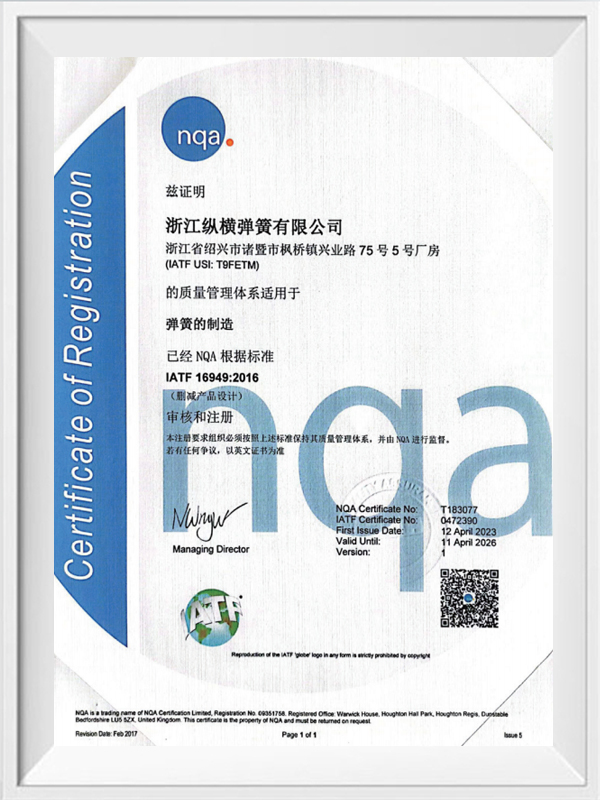 IATF 16949:2016
Latest News
-
Knowledge 2026-09-22
The spring constant of a car suspension is the force needed to compress the suspensi...
Read More -
Knowledge 2026-09-14
When the front of your car sits noticeably lower on one side, or the steering wheel ...
Read More -
Knowledge 2026-09-11
The spring constant of a car suspension spring—also known as the spring rate or stif...
Read More -
Knowledge 2026-09-04
Here is the practical answer you need before you order parts: springs carry the vehi...
Read More -
Knowledge 2026-08-24
A coil spring suspension system is a vehicle suspension design that uses helically w...
Read More
-
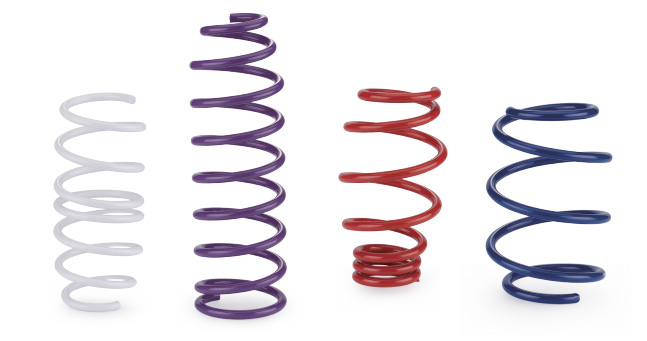
 Automobile Suspension Spring
1. Our automotive suspension springs are made with advanced manufacturing technology and are precisely designed to ensure smooth d...
-
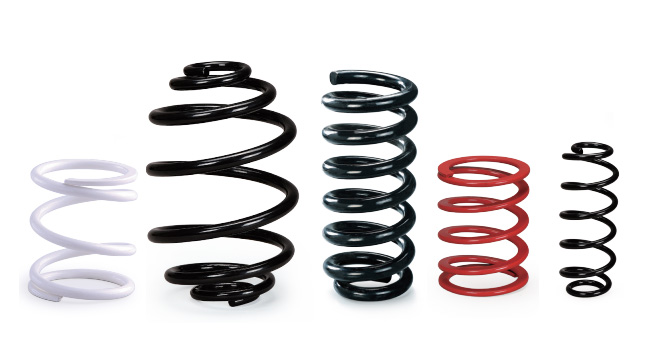 Modified Car Suspension Spring
1. Advantages of off-road vehicle modified suspension springsHigh-strength load-bearing capacity: Our off-road vehicle suspension ...
-
Brake Spring
1. Brake springs play an important role in ensuring the stability of the brake chamber and brake system.Precision manufacturing an...
Contact Us Now
Brake Chamber Springs For Trucks Industry knowledge
1. Overview
Brake chamber springs are compression coil springs installed inside the brake chamber assemblies of air brake systems on trucks, buses, trailers, and other heavy commercial vehicles. Their function is safety-critical: in a spring brake chamber, a large-diameter, high-load compression spring holds the brake applied when air pressure is absent, providing the vehicle's parking brake and emergency brake function. The spring is compressed and held back by air pressure during normal driving, and it applies the brake automatically when air pressure drops below a threshold or when the driver manually exhausts the spring brake circuit.
Because brake chamber springs are load-bearing safety components operating under sustained compressive stress and high-cycle fatigue conditions, their material, dimensional, and functional specifications are tightly controlled. Zhejiang Zongheng Spring Co., Ltd., based in Fengqiao, Zhuji, Zhejiang Province, manufactures brake system springs as a core product category, with production managed under the IATF/TS16949 quality management system and a laboratory equipped for full mechanical and fatigue validation.
2. Role in the Air Brake System
Heavy truck air brake systems use two distinct chamber types that are often combined in a single unit called a piggyback or combination brake chamber:
- Service brake chamber (front section): a diaphragm chamber actuated by service air pressure during normal braking. No heavy spring is present in this section; a small return spring retracts the pushrod when air pressure is released.
- Spring brake chamber (rear section): contains the power spring, a large compression coil spring that applies the brake by mechanical force when air pressure in the spring brake circuit is removed. This section provides parking brake and emergency brake function.
The power spring in the spring brake section is the primary brake chamber spring. It operates in a permanently compressed state during vehicle operation and extends fully only when air is exhausted from the chamber. The sustained compressive load under operating conditions, combined with the dynamic load cycles from road vibration transmitted through the chassis, defines the fatigue life requirement for this spring.
3. Spring Types Within Brake Chambers
| Spring Type | Location | Function | Load Level |
| Power spring | Spring brake section | Parking and emergency brake application | High — typically 2000 N to 4500 N at installed height |
| Diaphragm return spring | Service brake section | Retracts pushrod when service air is released | Low to medium |
| Caging bolt spring | Spring brake section | Holds power spring compressed during service or transport without air | Functional load — holds against power spring force |
4. Material and Strength Requirements
The power spring is one of the most demanding coil spring applications in commercial vehicle engineering. Key material and process requirements include:
- High tensile strength steel: alloy grades such as 55CrSi, 51CrV4, or equivalent are standard, with tensile strength after heat treatment typically in the range of 1800 MPa to 2050 MPa. The high strength allows the required braking force to be generated within the constrained chamber envelope.
- Controlled heat treatment: quench and temper cycles must be precisely managed to achieve the specified hardness and toughness balance. Deviation in heat treatment is a primary cause of premature fatigue failure or brittle fracture in service.
- Shot peening: compressive residual stresses induced by controlled shot peening significantly extend the fatigue life of the power spring under the sustained and cyclic loading conditions it experiences in service.
- Tight dimensional tolerances: the spring must meet the force specification at defined installed and working heights within close tolerances, as the braking force applied to the wheel is directly proportional to the spring load at working height.
- Corrosion resistance: the chamber interior is exposed to moisture through breathing during air pressure cycling. Coating integrity is critical because corrosion pits on a highly stressed power spring are direct fatigue crack initiation sites.
5. Key Dimensional and Functional Parameters
| Parameter | Significance in Brake Chamber Application |
| Free length | Determines the available stroke and braking force at full extension |
| Load at installed height | Must meet the minimum braking force requirement specified for the chamber size |
| Solid height | Must not be reached during maximum air pressure compression; coil bind causes permanent deformation |
| Outer diameter | Must fit within the chamber housing bore with defined clearance |
| Wire diameter | Determines stress level and spring rate; drives material grade selection |
| Fatigue life (cycles) | Defined by the number of brake apply-release cycles over the vehicle service life |
6. Chamber Size Designations
Brake chambers are designated by a size number that corresponds to the effective diaphragm area in square inches, following established commercial vehicle industry conventions. Common sizes used in truck and trailer applications include Type 20, Type 24, Type 30, and Type 36, with the spring specification varying by chamber size. Larger chamber sizes carry larger power springs with higher installed loads to generate the braking force required for heavier axle ratings. Spring dimensions and load specifications must be matched precisely to the chamber type, as an incorrectly specified spring alters the braking force and chamber stroke.
7. Quality Assurance and Testing
Given the safety-critical role of brake chamber springs, quality validation covers both incoming material and finished product:
- Spectrometer analysis: confirms incoming wire chemical composition against the specified alloy grade for each batch.
- Tensile testing: verifies wire mechanical properties including tensile strength and yield strength after heat treatment.
- Online flaw detection: identifies surface and sub-surface defects in the wire or finished spring that could serve as fatigue initiation sites under the sustained stress of the power spring application.
- Load testing at defined heights: each spring is load-tested at installed and working heights to verify it meets the force specification for the chamber type.
- Fatigue testing: springs are subjected to defined cyclic stress amplitudes and cycle counts to validate life performance before production release.
- Image analyzer: supports dimensional verification and cross-section examination for heat treatment quality assessment.
All production at Zongheng Spring is conducted under the IATF/TS16949 system, with batch-level traceability records covering material, process, and test data available to customers.
8. Frequently Asked Questions
Q: Why is the power spring dangerous to handle outside the chamber?
The power spring stores a very large amount of mechanical energy when compressed inside the chamber. If the chamber is disassembled without first caging the spring using the manufacturer's specified caging bolt procedure, the spring can release its stored energy suddenly and with sufficient force to cause serious injury. Brake chamber power springs must never be disassembled outside of a properly equipped workshop following the vehicle manufacturer's service procedures.
Q: What causes brake chamber spring failure in service?
The most common failure mode is fatigue fracture, typically initiated at a surface defect, corrosion pit, or decarburized zone in the wire surface. Corrosion is accelerated by moisture ingress through the chamber's air vent, particularly in vehicles operating in environments with road salt or high humidity. Fatigue failure can also result from a spring that was incorrectly specified, causing it to operate at a stress level above its design range. Regular inspection of chamber function and air system integrity is the primary maintenance measure for this component.
Q: Can the power spring be replaced independently, or must the whole chamber be replaced?
In most service situations, the spring brake section is replaced as a complete sealed unit rather than disassembling the chamber to replace the power spring alone, due to the safety risks associated with the stored spring energy. Some chamber designs are available in service kits that allow internal component replacement in a controlled workshop environment, but this must follow the specific procedure for that chamber model. Consult the vehicle or chamber manufacturer's service documentation before attempting any disassembly.
Q: How is the correct chamber size and spring specification identified for a specific truck?
The brake chamber size is specified by the vehicle manufacturer and is stamped or labeled on the chamber housing. The spring specification is matched to the chamber type and must conform to the load and dimensional requirements for that size designation. Replacement springs must match the original chamber specification; substituting a spring from a different chamber size or with a different load rating will alter the braking force and may not meet the vehicle's brake performance requirements.
Q: What information is required to order brake chamber springs from Zongheng Spring?
A complete spring order specification should include: chamber type or size designation, free length, outer diameter, wire diameter, load at installed height and at working height, solid height limit, material grade or minimum tensile strength requirement, fatigue life target (stress amplitude and cycle count), and surface treatment specification. Existing OE part numbers or sample springs can also be used as the reference basis for reverse-engineering or cross-referencing to the production specification.
Zhejiang Zongheng Spring Co., Ltd. | Fengqiao, Zhuji, Zhejiang Province, China | Established 2021
This document is prepared for general industry reference. Specifications and process details are indicative and subject to confirmation for each product application. Brake system components must be specified, installed, and serviced in accordance with applicable vehicle manufacturer and regulatory requirements.
INQUIRE NOW
CONTACT US

- ADD: No. 75 Xingye Road, Fengqiao Town, Zhuji City, Zhejiang Province, China
- Tel: +86-575-87599266
- Mob: +86-13675761610
- Email: [email protected]
