

 English
 中文简体
中文简体 Deutsch
 Español
Should you replace your shocks when you install lowering springs? Yes, and in most cases it is not optional. Lowering springs shorten suspension travel and increase spring rate, so the original shocks do not have enough stroke or damping force to control the axle. You get a bouncy, harsh, and sometimes dangerous ride. If you want the advertised stance, predictable handling, and reasonable comfort, plan to fit dedicated shocks designed for lowered ride height.
Content
- What Are Lowering Springs and How Do They Work?
- Do Lowering Springs Require New Shocks?
- Spring Rate and Damping: Why Matching Matters
- How to Choose the Right Shocks for Lowering Springs
- What Performance Benefits Can You Expect?
- Common Installation Mistakes to Avoid
- Frequently Asked Questions About Lowering Springs and Shocks
- The Bottom Line
What Are Lowering Springs and How Do They Work?
Lowering springs are shorter coil springs that reduce the ride height by roughly 20 to 60 millimetres. They are usually formed from alloy steel with a higher spring rate than the factory springs. The smaller overall height lowers the centre of gravity, which reduces body roll and gives the car a more aggressive appearance.
A spring only stores energy. The shock absorber, or damper, controls how quickly that energy is released. When you lower the car with springs alone, you change only the storage side of the equation. To make the system work, the damper must be re-tuned or replaced to match the new spring rate and shorter available travel. That is why lowering springs and shocks should be treated as one system, not two separate parts.
Do Lowering Springs Require New Shocks?
In nearly every real-world case, yes. The factory shock absorber is tuned for factory springs, factory ride height, and factory bump stops. Once the spring rate increases and the ride height drops, the shock becomes the weakest link.
What Goes Wrong with Factory Shocks?
The most common signs of a factory shock being overworked by lowering springs include:
- Bottoming out over bumps because the piston rod is already too close to full compression or extension.
- Persistent bouncing after a bump, since the damping force cannot settle the stiffer spring in one cycle.
- Oil foaming and fade when the shock works far beyond its intended ride zone.
- Leaking seals that appear after only a few thousand miles because of higher internal pressures and off-axis loads.
The result is a car that feels floaty over undulations, busy over sharp edges, and less stable during fast lane changes. In extreme cases, the tyres can briefly lose contact with the road after a large impact.
Can You Keep the Existing Shocks?
You can physically bolt lowering springs onto original shocks, but the margin for error is tiny. A drop of only 20 millimetres moves the damper piston significantly away from its designed mid-stroke. If the shocks already have more than 50,000 km on them, their internal valving is softer than spec. This is one place where trying to save money ends up costing more in tyre wear, bushings, and replacement labour.
Spring Rate and Damping: Why Matching Matters
The suspension tuning principle is called critical damping. When a wheel hits a bump, the spring compresses and releases. The shock must absorb enough energy to return the suspension to its normal ride height without a second bounce or constant tremor. Too little damping, and the car bounces; too much damping, and the tyre cannot follow the road surface.
Lowering springs increase spring rate, so they require more damping force. They also reduce the amount of piston travel, so the shock body must be shortened or use internal hydraulic stops to prevent hard bottoming. That is why a shock described as “for lowered cars” is not just an advertising phrase; it has specific stroke lengths, valving curves, and bump-stops designed around the reduced ride height.
The table below compares a factory shock with a dedicated lowering shock when fitted to the same lowering spring setup:
| Characteristic | Factory Shocks | Lowering-Designed Shocks |
|---|---|---|
| Stroke range | Designed for original ride height | Shortened body and rod to avoid bottoming out |
| Damping force | Matched to factory springs | Rated for higher spring rates |
| Ride control | Washes out over large bumps | Controlled, single-oscillation response |
| Durability | Seals wear quickly | Heavy-duty seals and hydraulic stops |
| Overall balance | Poor for lowered geometry | Stable for daily and sporty driving |
How to Choose the Right Shocks for Lowering Springs
Start by measuring or confirming the exact drop you want. Then look for a shock that lists its extended and compressed length, not just a spring kit number. The goal is to keep the damper piston inside its most efficient stroke at normal ride height.
Use these criteria when comparing products:
- Shock stroke: the shock body or piston rod should be shortened enough to match the lowered suspension travel.
- Damping adjustability: single- or dual-adjustable units let you tune the ride for street or track conditions.
- Valving range: the compression and rebound forces should be published for the specific spring rate you plan to use.
- Bump-stop design: progressive bump stops on the shock help absorb large hits before metal-to-metal contact.
While the shock receives most of the attention, the spring itself must be consistent and durable. A serious spring manufacturer uses clean input steel, controlled heat treatment, shot peening, and fatigue testing. This is especially important for modified car suspension springs because the stress levels are higher than factory parts. When the spring rate is stable across production batches, matching a shock becomes a predictable task.
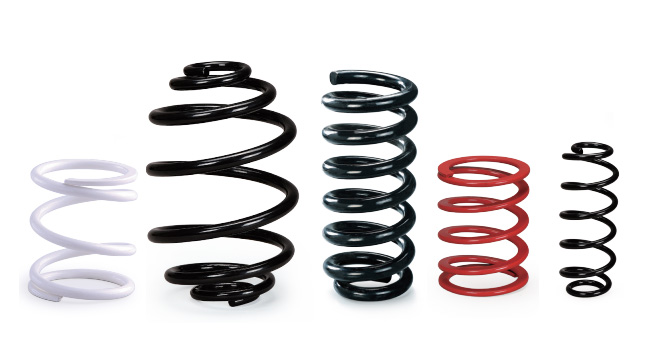 Modified Cars Off-Road Vehicles Suspension Springs ManufacturersZhejiang Zongheng Spring Co., Ltd. is Leading China manufacturer of wholesale suspension springs for modified cars & off-road vehicles. S...View Product →
What Performance Benefits Can You Expect?
A correctly matched lowering spring and shock package will change the car in four noticeable ways:
- Less body roll in corners because the lower centre of gravity reduces weight transfer.
- Sharper steering response, as the suspension settles more quickly after turn-in.
- Improved braking stability, because the rear does not rise or pitch as much under hard braking.
- More confident high-speed driving, thanks to reduced lift and better aerodynamic balance.
Those benefits come with a trade-off. Ride stiffness increases, and a rough road will feel busier than before. If you drive daily on broken pavement, consider a progressive-rate spring, which is softer through initial travel and stiffer deeper in the stroke. We have published a simple explanation of linear versus progressive OE replacement springs if you want to compare those options before buying.
Common Installation Mistakes to Avoid
Even a high-quality spring and shock set will perform poorly if installed incorrectly. The following mistakes are the ones we see most often in workshops.
- Reusing old bump stops or dust boots that have become brittle with age.
- Torquing suspension arm bushings while the wheels are still in the air; the bushings must be tightened at normal ride height to avoid rubber stress.
- Skipping a four-wheel alignment after lowering; toe, camber, and caster all change.
- Mixing springs from one brand with shocks from another without checking published spring-rate and stroke data.
If you later decide that a lowered car is not for you, restoring the original settings with correctly specified automobile suspension springs is a clean solution. OE replacement springs are manufactured to factory tolerances and will bring the car back to its intended ride height.
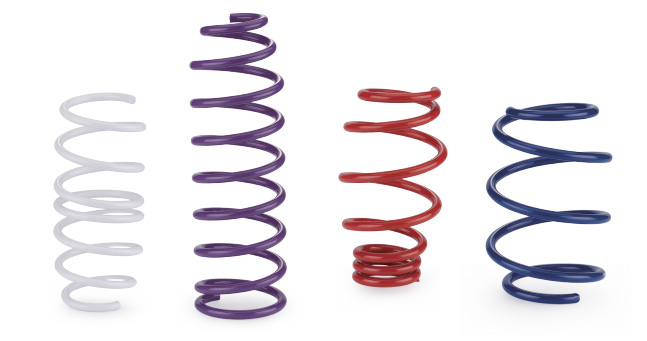 OE Replacement Car Suspension Springs Manufacturers, SuppliersZhejiang Zongheng Spring Co., Ltd. is a China OE Replacement Car Suspension Springs manufacturer and suppliers, Specializing in wholesale...View Product →
Before you change anything, understand the effect that a modified suspension spring can have on vehicle stability. Our article on how modified springs affect vehicle stability explains the geometry changes that occur when ride height drops.
Frequently Asked Questions About Lowering Springs and Shocks
- Can I install lowering springs without new shocks? You can, but it will not perform well. The original shocks are too soft and too long for the new springs. They will wear and degrade quickly, especially if the vehicle is lowered more than 20 millimetres.
- How do I know if a shock is designed for a lowered car? Check the product sheet for the fully compressed and fully extended lengths, as well as the recommended spring rate range. A shock marketed as “lowered” or “sport” has shorter travel and stronger valving, but you still need to verify that it matches your specific drop and spring rate.
- Are coilovers better than lowering springs with separate shocks? Coilovers combine the spring and damper in one assembly with adjustable height, so they simplify tuning. A separate lowering spring and shock package is usually more comfortable and less expensive. The right choice depends on your performance goals and budget.
- How long should a lowering shock last? A quality shock lasts roughly 60,000 to 100,000 km on normal roads. Poorly matched springs, aggressive lowering, or track use will shorten that life. Early leaks or severe bouncing are the main warnings.
The Bottom Line
Lowering springs and shocks are a matched pair. If you change one, change the other. Premium lowering springs need a shock with enough damping force to control the stiffer spring and a short enough stroke to fit the new geometry. The result is a lower, tighter, and more responsive car that remains safe to drive every day.
When you shop, look for components backed by evidence: surface finish, wire material, heat treatment, shot peening, fatigue certs, and published test data. That is the difference between a simple spring and a dependable suspension upgrade. Pay attention to tolerances, and you will keep your vehicle stable for years.